
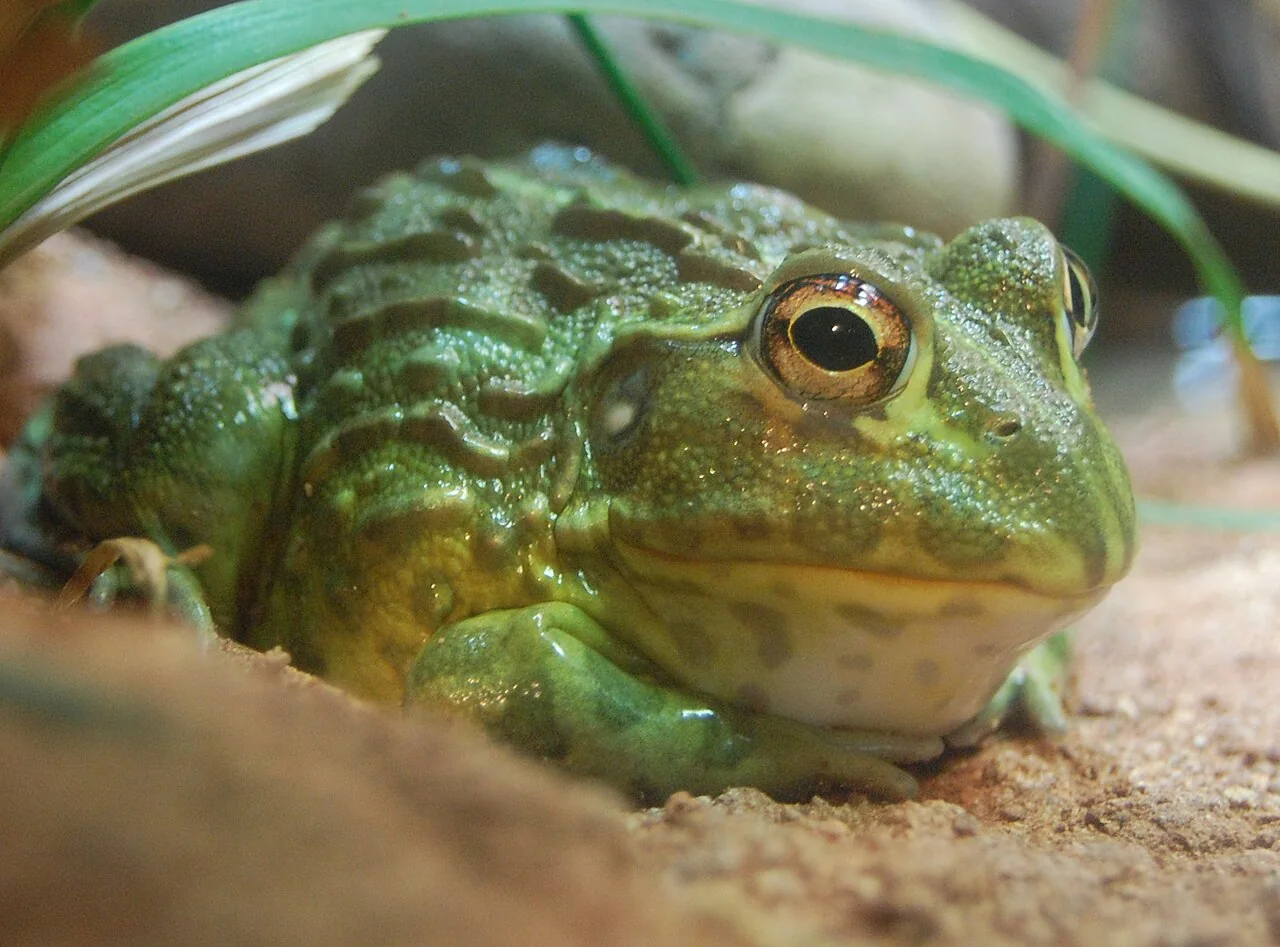
Scientific name
Pyxicephalus adspersus
Pyxicephalus adspersus is a large African frog. The trade term ‘pixie frog’ does not always distinguish this species from its close relatives. [1]
Origin
Savannas of southern and eastern Africa. [1]
- Burrower
- Carnivorous
- Solitary
At a glance
| ADULT SIZE | Male 15–25 cm Females ≈ 9–14 cm. [3] |
|---|---|
| LIFESPAN | 15–25 years Captivity, suitable husbandry. [3] |
| LIFESTYLE | Burrower Activity linked to rainfall in savannas. [2] |
Adult size
Chicago Exotics: males around 15–25 cm; females around 9–14 cm. Ranges, not guaranteed sizes. [3]
Lifespan
15–25 years in captivity according to Chicago Exotics; longer in some zoological observations. [2][3]
Lifestyle
A burrower, it waits for prey and follows the rhythm of rainfall. [2][3]
Housing
INDIVIDUAL HOUSING
Ground for burrowing — Cannibalism possible; moist substrate and suitable water. [3]
Individual housing to prevent cannibalism, with moist ground that allows burrowing and suitable water. [3]
Care parameters
AMBIENT AIR
≈ 25–28 °C — Measure at substrate level. [3]
NIGHT
≥ 20 °C — Clinical reference outside aestivation. [3]
Humidity
80–90 % — Clinical reference; substrate also moist. [3]
Ambient air
≈ 25–28 °C. [3] Measure at substrate level; regulated heating.
Night
Minimum ≈ 20 °C in the clinical care sheet. [3] Active husbandry reference, no imposed aestivation.
Humidity
80–90 % according to Chicago Exotics. [3] Keep the substrate moist as well; monitor air and ground separately.
Feeding
VARIED WORMS AND INSECTS
Worms and insects; avoid excessive rodents. [3]
Feeding
Earthworms and varied insects. The clinic links excessive rodents to obesity. [3]
Seasonality and strength
The zoo describes life in sometimes dry savannas and buried phases during long periods without rain. It also mentions some males protecting tadpoles. These natural behaviours do not constitute a domestic aestivation protocol. [2]
Useful records
Record weight, meals, refusals and visible burrowing depth. Distinguish usual quiet periods from a sudden change. Keep species identity and sex when established; size differences make comparisons without context misleading. Prepare interventions without placing fingers in front of the mouth.
Handling, shedding and maintenance
LafeberVet describes a powerful frog capable of grabbing what it takes for prey. Avoid presenting fingers as a target; handling must remain brief, with clean moistened hands or protection suitable for amphibian skin. [4]
Shed skin can be swallowed: do not wait for an entire skin on the ground before recording an observed shed. The environment must remain moist without being waterlogged, with shallow water and frequent removal of soiling. [4]
Dietary supplements: distinguish the situations
The Chicago Exotics care sheet provides for calcium and vitamin supplements on food. [3]
Scope: captivity; Chicago Exotics protocol for Pyxicephalus adspersus. Consider diet composition and the enclosure; no universal dosage is set by this synthesis.
Checklist
- Plan individual housing.
- Check ground and water quality.
- Monitor portions and weight.
Observations to record
- Weight
- Meals
- Burrowing
- Temperatures
The app provides individual animal records. Check which features are available for your animal in the released version.
Related guides
Original guides in French
Sources
Document-based overview; not a substitute for veterinary advice.
- AMNH — Amphibian Species of the World : Pyxicephalus adspersus
Source accessed - Potawatomi Zoo — African bullfrog
Source accessed - Pixie Frog Care / African Giant Bullfrog (Pyxicephalus adspersus)
Source accessed - LafeberVet — Crapaud-buffle africain, Christal Pollock DVM
Source accessed