
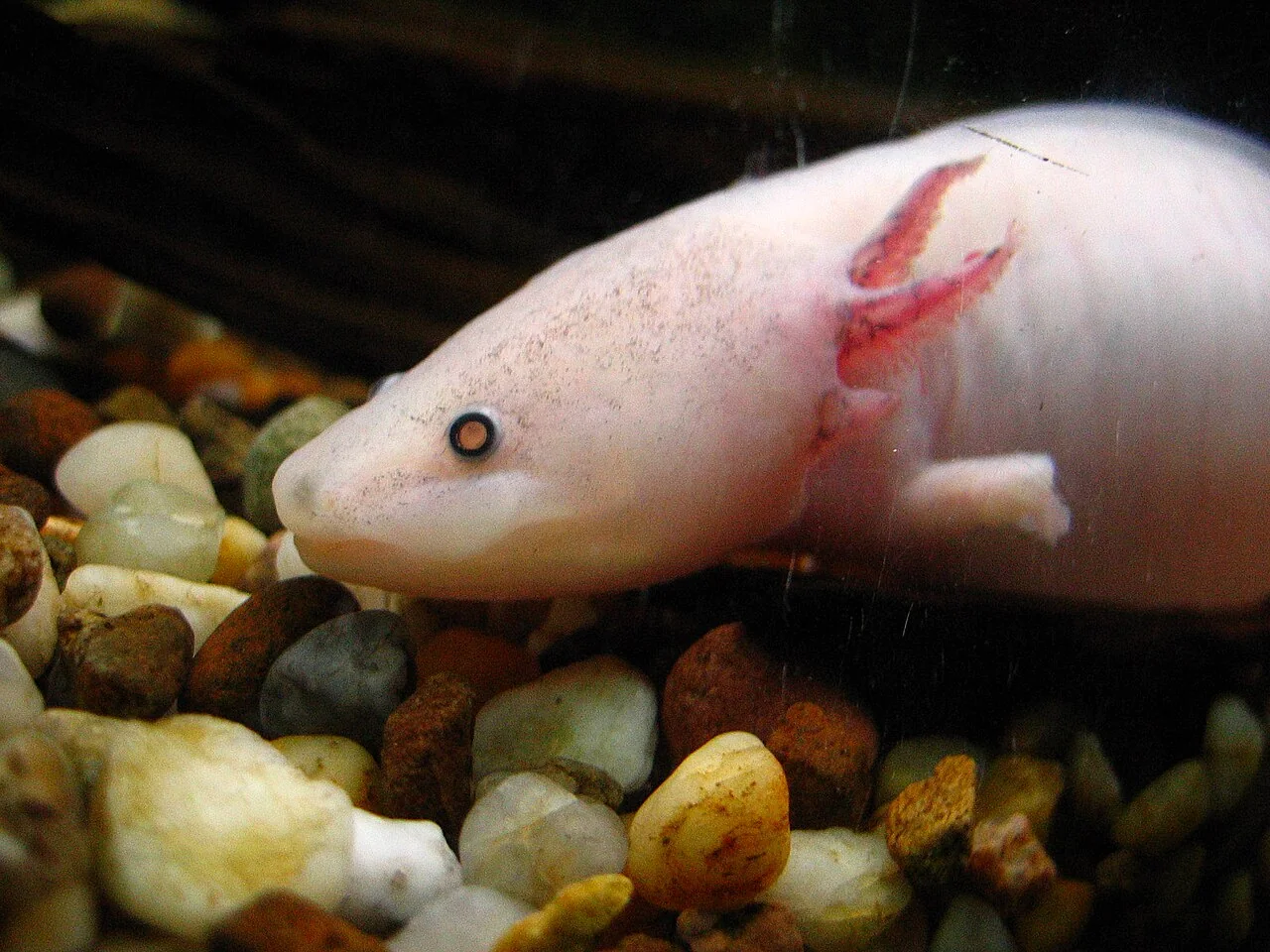
Scientific name
Ambystoma mexicanum
The axolotl is an aquatic salamander that normally retains larval features, notably its external gills, while becoming reproductively mature. [1] Its setup should be planned as a cool, stable, maintained aquarium, not a tropical terrarium filled with water.
Origin
Native to the lake systems of the Valley of Mexico; the Xochimilco canals are central to the conservation efforts presented by San Diego Zoo. [1]
- Cool water
- Mature filtration
- Captive origin
Documentary overview: identity checked; natural observations and captive practices attributed separately. Undocumented limits remain explicit.
At a glance
Native to the Valley of Mexico, notably Xochimilco. Aquatic amphibian, often waiting in ambush under low light. [1][3]
| SIZE | 20–30 cm Length including tail, clinical guideline [2]. |
|---|---|
| LIFESPAN | 10–15 years Zoological guideline, not a guarantee [1]. |
| LIFESTYLE | Aquatic Adult normally retains gills [1]. |
Adult size
Approximately 20–30 cm in the Royal Veterinary Center clinical sheet; body length including the tail. This guideline is not an absolute maximum size. [2]
Lifespan
San Diego Zoo presents 10–15 years as a lifespan guideline; this is neither an individual guarantee nor a detailed record. [1]
Lifestyle
Aquatic, often an ambush predator and active in low light; adults also occasionally surface to breathe air. [3]
Housing
ADULT AQUARIUM
75–110 L suggested — Clinical guideline with refuges [2].
Royal Veterinary Center suggests approximately 75–110 litres for an adult, with low flow and refuges. The volume actually usable after furnishing matters. [2]
Care parameters
WATER
16–18 °C — Royal Veterinary Center [2].
FLOW
Low — Established biological filtration [2].
Humidity
Water quality — Monitor nitrogenous waste; no air-humidity target.
Water
16–18 °C according to the clinic [2] The university centre works at around 15–18 °C; monitor summer peaks. [4]
Filtration
Established biological filter, moderate flow [2] Clear water may nevertheless contain dissolved waste.
Lighting
Subdued, with shaded retreats [3] Plant lighting must not force the animal into permanent exposure.
Feeding
WORMS AND SUITABLE FOODS
Invertebrates and formulated foods, monitored portions and leftovers removed [2][3].
A salamander, not a fish
Having gills does not make an axolotl a fish. The zoo explains the retention of juvenile features into reproductive maturity. [1] For the keeper, this means an adult normally remains in water: a transition to terrestrial life should not automatically be prepared as it would for a tiger salamander. An unusual anatomical change requires specialist advice, not environmental manipulation to trigger transformation.
Adult size, lifespan and lifestyle
Approximately 20–30 cm in the Royal Veterinary Center clinical sheet; body length including the tail. This guideline is not an absolute maximum size. [2]
San Diego Zoo presents 10–15 years as a lifespan guideline; this is neither an individual guarantee nor a detailed record. [1]
Aquatic, often an ambush predator and active in low light; adults also occasionally surface to breathe air. [3]
Prepare for summer before acquisition
Recommendations converge on cool water. [2][4] Measuring the room's maximum temperature over several hot days establishes whether an aquarium can remain suitable there. A tolerable location in October says nothing about July. The project must include cooling operation, noise, maintenance and a backup for failure; buying the animal before this check reverses the useful order.
Water, filtration and waste
The university centre stresses removing disinfectants from mains water and avoiding extremely soft water or distilled water alone. [4] The clinic recommends mature biological filtration. [2] Ammonia and nitrite measurements, water changes and filter interventions should be comparable. Knowing the volume actually replaced is preferable to recording only ‘cleaning done’.
A bottom that remains inspectable
The clinic advises against gravel that could be swallowed and suggests, among other options, a bare bottom or suitable fine sand. [2] A simple bottom makes leftover inspection easier without requiring the whole tank to lack refuges. Also check gaps between stones, hide entrances and access to equipment. A decoration must not become a trap as the animal grows or turns around.
Food and actual consumption
The zoological programme uses invertebrates, including earthworms, and suitable formulated foods. [3] Bite size and accepted quantity are monitored individually; a menu is more than a brand name. Removed leftovers provide different information from food offered. For lasting refusal, first review water and temperature history with a professional, without imposing force-feeding.
Cohabitation and size differences
The university colony describes biting and cannibalism when differently sized juveniles are kept together. [4] A group must therefore remain separable, with monitoring that attributes each meal and injury to an individual. No conflict during a short observation does not guarantee no nighttime problems. Individual housing simplifies this attribution, particularly on arrival or during monitoring.
Reproduction: plan for larvae
The male deposits a spermatophore, and the female then attaches her eggs separately to supports; the zoo describes clutches that may contain several hundred eggs. [1] This requires planned housing capacity, suitable larval food and separation according to growth. Egg count must not be presented as the number of animals that will become available for sale. Breeding is not a simple optional feature of a decorative aquarium.
Conservation and this profile's limitations
Colourful captive individuals do not replace wild populations or habitat restoration. [1] Request traceable captive origin and check applicable rules before acquisition. Older laboratory protocols may use very small containers and specific procedures; these are not adopted as a domestic model. This profile excludes medicated baths, improvised treatments and recipes intended to force development.
Checklist
- Check summer temperatures.
- Prepare the filter before arrival.
- Avoid gravel that could be swallowed.
Observations to record
- Water
- Temperature
- Meals
- Growth
The app provides individual animal records. Check which features are available for your animal in the released version.
Related guides
Related guides
Original guides in French
Sources
Document-based overview; not a substitute for veterinary advice.
- San Diego Zoo Wildlife Alliance — Axolotl
Source accessed - Royal Veterinary Center — Axolotl care
Source accessed - San Diego Zoo Wildlife Alliance — Axolotl, managed care
Source accessed - Susan T. Duhon, Ambystoma Genetic Stock Center — Guide to Axolotl Husbandry
Source accessed