
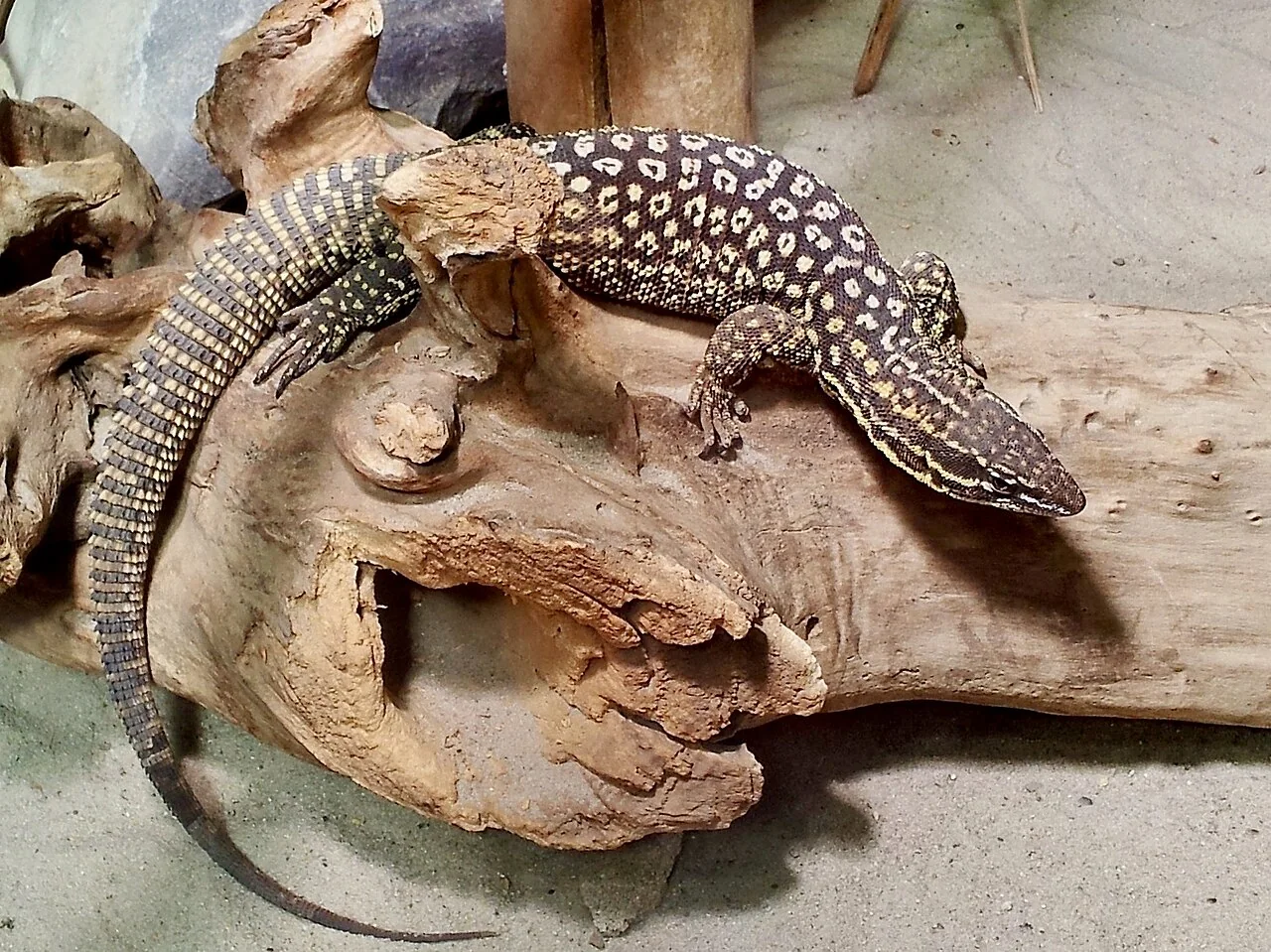
Scientific name
Varanus acanthurus
Its spiny tail helps this monitor wedge itself into rock crevices. Shelters protect it from predators and thermal extremes [2].
Origin
Northern Australia [1].
- Diurnal
- Terrestrial
- Burrowing
At a glance
| ADULT SIZE | 60–75 cm Smithsonian range; length convention not detailed [1]. |
|---|---|
| LIFESPAN | 10–15 years In captivity [1]. |
| LIFESTYLE | Ground-dwelling Diurnal, solitary, using crevices and burrows [2]. |
Adult size
Around 60–75 cm in adults according to the Smithsonian, without an explicit length convention [1].
Lifespan
Around 10–15 years in captivity according to the Smithsonian [1].
Lifestyle
Terrestrial, diurnal and generally solitary [2].
Housing
ROCKS AND BURROWS
Stable shelters — Stable rocks and digging opportunities, observed at North Carolina Zoo [2].
Provide stable rocks and shelters that allow digging; these behaviours are observed at North Carolina Zoo [2].
Care parameters
WARM AIR · DAY
29–38 °C — [3] ReptiFiles reference; does not describe the heating surface.
COOL AIR · DAY
24–28 °C — [3] The cool retreat must remain accessible.
Humidity
Humid burrows — ReptiFiles distinguishes ambient air from burrows, where humidity is intended to reach at least 80 % [4].
Warm air · day
29–38 °C [3] ReptiFiles reference; does not describe the heating surface.
Cool air · day
24–28 °C [3] The cool retreat must remain accessible.
Humidity
Humid burrows ReptiFiles distinguishes ambient air from burrows, where humidity is intended to reach at least 80 % [4].
Feeding
AN APPROPRIATE DIET
At the Smithsonian: varied insects and occasional mice [1].
Feeding
At the Smithsonian: varied insects, with occasional mice. In the wild, the diet also includes other small animals [1].
Behaviour and precautions
Do not pull an animal deliberately wedged into a crevice: its tail helps with this defensive anchoring [2].
Daily monitoring
Record air temperatures and heated-support temperatures separately. Note digging periods, meals and weight. Regularly check the stability of furnishings after substrate has been moved, and maintain access to shelters.
Interpreting temperatures
ReptiFiles distinguishes heating surfaces that are much hotter than the air. The two values displayed here concern air only and do not constitute a surface setting. Its humidity page gives different ambient ranges in the text and summary: no single ambient range is adopted here [3] [4].
Checklist
- Secure rocks before adding substrate.
- Measure air and surface separately.
- Check shelter humidity.
Observations to record
- Meals
- Weight
- Sheds
- Temperature
- Humidity
The app provides individual animal records. Check which features are available for your animal in the released version.
Related guides
Original guides in French
Sources
Document-based overview; not a substitute for veterinary advice.
- Smithsonian’s National Zoo — Spiny-tailed monitor
Source accessed - North Carolina Zoo — Spiny-tailed Monitor
Source accessed - ReptiFiles — Ackie Monitor Temperatures & Heating
Source accessed - ReptiFiles — Ackie Monitor Humidity Requirements
Source accessed