
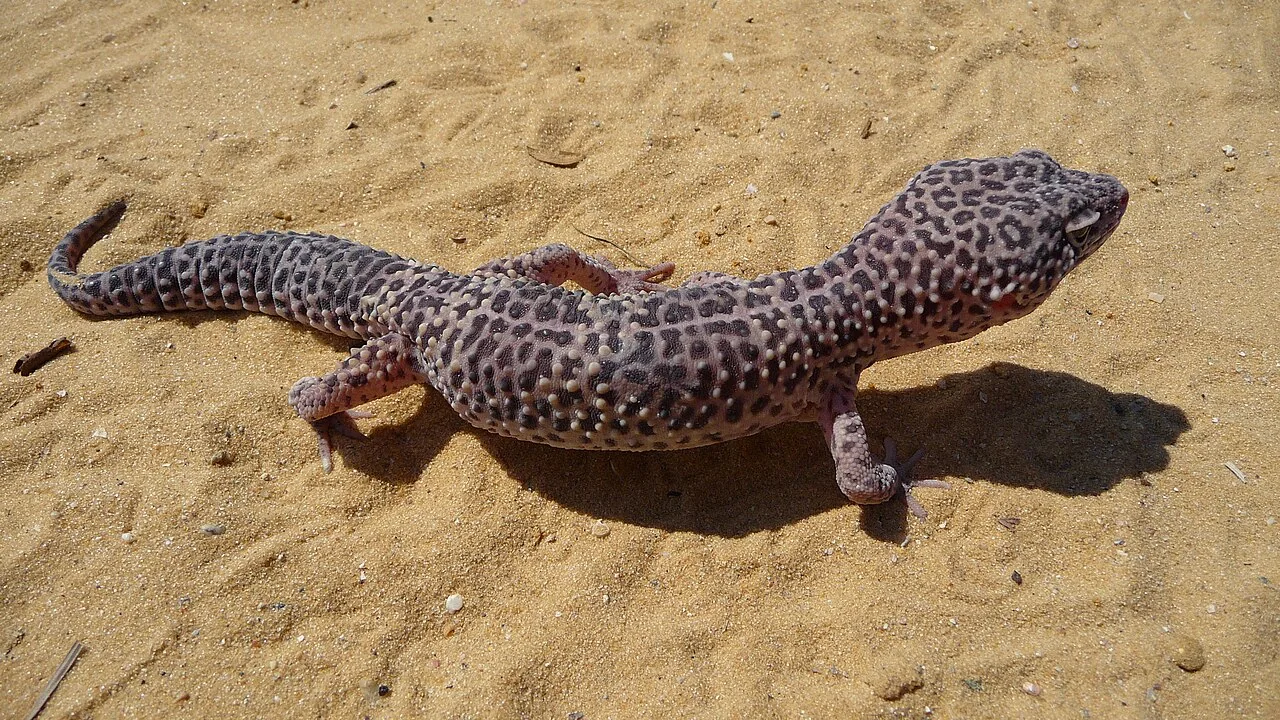
Scientific name
Eublepharis macularius
Eublepharis macularius is the leopard gecko, native to South Asia. [2]
Origin
Southern Afghanistan, Pakistan and north-western India according to MedVet; rocky terrain and dry scrub described by the RSPCA. [1][2]
- Terrestrial
- Crepuscular
- Insectivorous
- Individual housing
At a glance
| ADULT SIZE | 20–25 cm Measurement convention not specified [2]. |
|---|---|
| LIFESPAN | Up to 20 years RSPCA reference [1]. |
| LIFESTYLE | Ground-dwelling Crepuscular activity [1]. |
Adult size
20–25 cm in the MedVet guide, with no length measurement convention specified. [2]
Adult weight
45–80 g according to MedVet; males are generally larger. This descriptive range is not a feeding target. [2]
Lifespan
Up to 20 years according to the RSPCA. [1]
Lifestyle
Ground-dwelling and mainly active at dusk; it hunts invertebrates. [1][3]
Beginner with guidance
Editorial assessment: manageable with guidance, provided that prey and supplements are properly managed and the humid hide and food intake are monitored. [1][3]
Housing
SHELTERS AT GROUND LEVEL
60 × 30 × 40 cm — RSPCA minimum; length × depth × height [1].
RSPCA minimum: 60 × 30 × 40 cm, length × depth × height, for one adult. [1]
Care parameters
WARM SPOT · DAY
28–30 °C — RSPCA reference [1].
COOL AREA · DAY
24–26 °C — Separate measurement [1].
Humidity
30–40 % — Cool end; separate humid hide [1].
Day
Warm spot 28–30 °C; cool area 24–26 °C [1] Thermostat; separate measurements.
Night
18–20 °C [1] Heat without light if needed.
UVB
UVI 0,7 at the warm end → 0 in the shade [1] 12 h/12 h; red-eyed morphs need individual assessment.
Humidity
30–40 % at the cool end [1] Add a separate humid hide.
Feeding
A VARIETY OF INSECTS
Varied, well-fed insects; frequency adapted to age [3].
Substrate, water and shelters
Warm and cool shelters, a humid hide; hardening clay or rough stones. Use a non-loose substrate for very young animals; avoid calcium sand. [1]
MedVet recommends replacing the water in an accessible shallow dish daily. Keeping accessories easy to clean makes it possible to see droppings and track what has actually been eaten. [2]
Meals suited to growth
Chicago Exotics suggests insects daily for young animals and every other day for adults. Vary suitable prey, feeding the insects before offering them; remove any remaining insects. The quantity depends on their size and on the animal. [3]
Provide calcium and vitamins in accordance with UVB exposure and diet. Agree on a programme with the veterinarian and follow the labels; no D3 dosage is prescribed here. [3]
Handling and living together
The RSPCA favours individual housing. [1] Fright or pulling can cause tail loss; the regrown tail looks different. Never grab the tail. [3]
Breeding and limitations
A female can produce infertile eggs: a moist egg-laying site remains useful even without a male. [1] Chicago distinguishes sexual maturity from actual readiness to breed; a stated age alone is therefore not enough to start breeding a pair. [3]
Incubation is not covered in detail here. The plan must include housing for the young, observation of the female and veterinary help if egg-laying seems abnormal. No seasonal temperature drop is suggested as an automatic step.
Signs to record promptly
A thinning tail, diarrhoea, vomiting or a soft jaw warrant a consultation. Tight retained shed on the toes threatens their circulation. [3] The log describes these signs without establishing their cause.
Comparing weights over time and alongside body shape provides more information than a single threshold in grams. [4] Record activity, food intake, droppings and the condition of the toes daily; also record any changes to heating, furnishings or food so the context can be traced.
Checklist
Observations to record
- Weight and body shape
- Food intake
- Shedding around the toes
- Droppings
- Day and night measurements
The app provides individual animal records. Check which features are available for your animal in the released version.
Related guides
Related guides
Original guides in French
Sources
Document-based overview; not a substitute for veterinary advice.
- RSPCA — Caring for your Leopard Gecko
Source accessed - MedVet — Leopard Gecko Information and Care Recommendations
Source accessed - Chicago Exotics Animal Hospital — Leopard Gecko Care
Source accessed - Merck Veterinary Manual — Clinical Procedures for Reptiles
Source accessed