
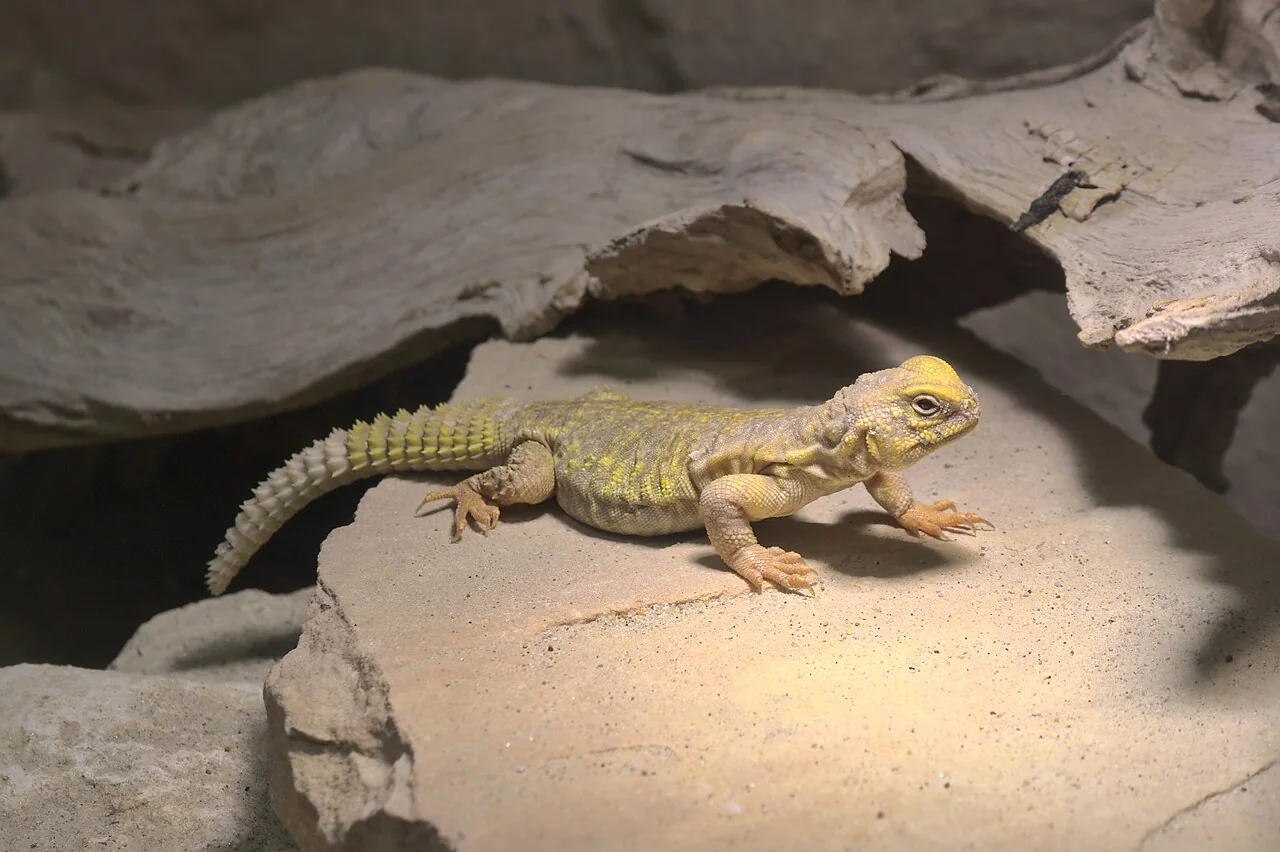
Scientific name
Uromastyx geyri
Uromastyx geyri inhabits rocky desert habitats. Its spiny tail and movements between exposed areas and shelter are among its observable features [1] [2].
Origin
Southern Algeria, Mali and Niger, particularly the Ahaggar and Aïr regions [3].
- Sahara
- Rocky habitat
- Plant-based diet
At a glance
| ADULT SIZE | Up to 35,5 cm Up to 35,5 cm in total length reported in the zoological publication [2]. |
|---|---|
| LIFESPAN | To be documented Not quantified in the selected sources. |
| LIFESTYLE | Rocky shelters A desert lizard that uses rocky shelters [1] [2]. |
Adult size
Up to 35,5 cm in total length reported in the zoological publication [2].
Lifespan
Not quantified in the selected sources.
Lifestyle
Housing
ROCKS AND PLACES TO RETREAT
Stable supports and shelters — Provide stable rocky supports, shelters and a genuine opportunity to leave the exposed area. The dimensions of an enclosure described in a zoological study do not, by themselves, constitute a recommended minimum [2].
Provide stable rocky supports, shelters and a genuine opportunity to leave the exposed area. The dimensions of an enclosure described in a zoological study do not, by themselves, constitute a recommended minimum [2].
Care parameters
BASKING · PUBLISHED CASE
45–50 °C observed — 45–50 °C in a zoological monitoring study [2] This refers to the basking site in the case studied, not a universal ambient temperature to apply without assessment.
HEAT, LIGHT AND UV
To be planned together — Enclosure elements to be planned together [2] Measure at accessible locations and provide opportunities to retreat into shade; have the husbandry plan clarified before the animal arrives.
Humidity
To be documented — The profile gives no humidity value. This still needs to be documented before setting up the enclosure.
Basking: published observation
45–50 °C in a zoological monitoring study [2] This refers to the basking site in the case studied, not a universal ambient temperature to apply without assessment.
Heat, light and UV
Enclosure elements to be planned together [2] Measure at accessible locations and provide opportunities to retreat into shade; have the husbandry plan clarified before the animal arrives.
Feeding
ZOOLOGICAL OBSERVATIONS
Phoenix Zoo describes a diet that includes leaves and flowers, with occasional invertebrates for young animals. The zoological monitoring study documents various plant foods. These observations do not justify copying a ration or breeding schedule without adaptation [1] [2].
Feeding
Phoenix Zoo describes a diet that includes leaves and flowers, with occasional invertebrates for young animals. The zoological monitoring study documents various plant foods. These observations do not justify copying a ration or breeding schedule without adaptation [1] [2].
Behaviour and precautions
Observation should allow the animal to use its shelters. Plan maintenance so that you can work without dismantling all the furnishings every day; check that the rocks are stable before placing the animal in the enclosure.
Monitoring and limitations
Record foods eaten, weights and basking times. Photograph the positions of probes so that measurements can be repeated. The publication describes experience in a zoo: this profile does not turn its cohabitation arrangements or seasonal changes into instructions for home care.
Checklist
- Secure rock structures.
- Have the heat and UV plan clarified.
- Distinguish air measurements from surface measurements.
Observations to record
- Meals
- Weight
- Activity
- Temperature
- Lighting
The app provides individual animal records. Check which features are available for your animal in the released version.
Related guides
Original guides in French
Sources
Document-based overview; not a substitute for veterinary advice.