
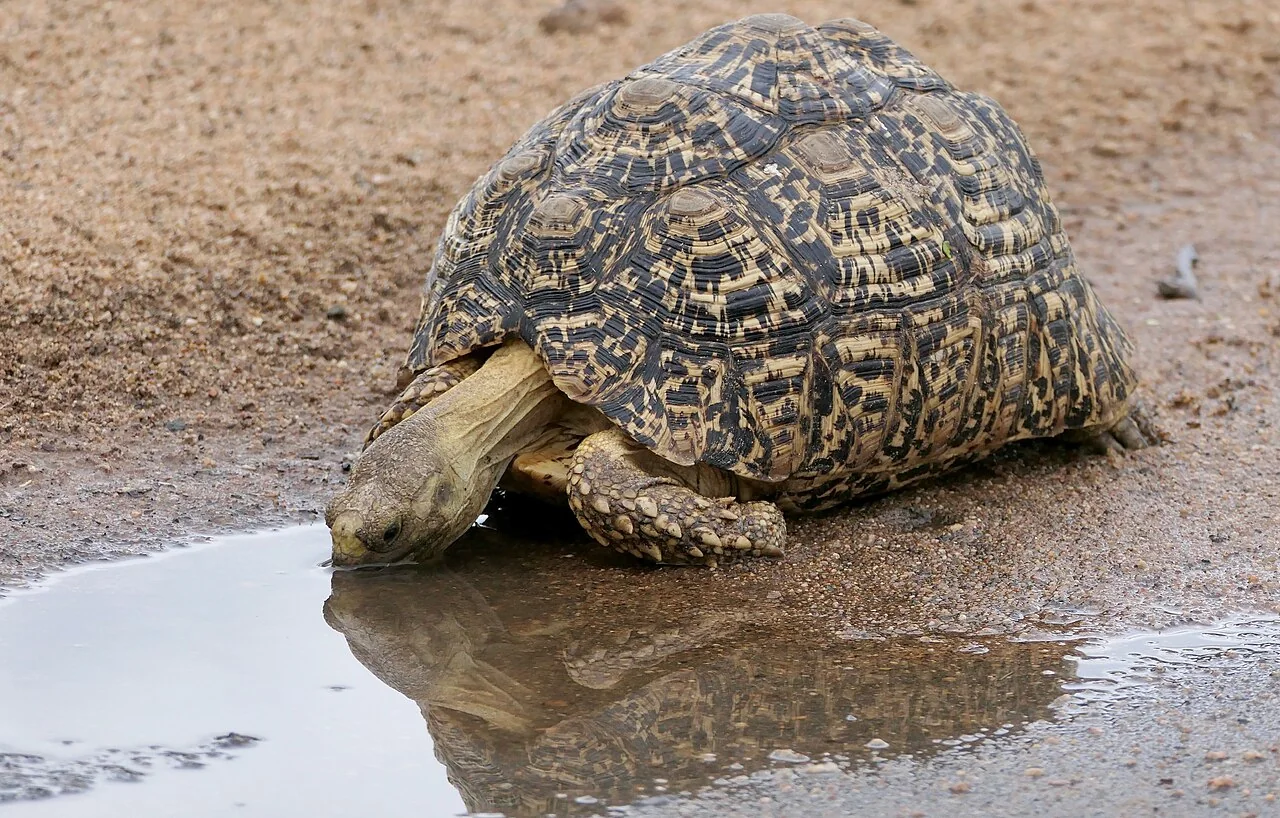
Scientific name
Stigmochelys pardalis
Stigmochelys pardalis is the name adopted by The Reptile Database. The former subspecies pardalis and babcocki are not recognised by all recent authors. [1]
Origin
Savannas of eastern and southern Africa. [1][2]
- Herbivorous
- Diurnal
- Large enclosure
At a glance
| ADULT SIZE | ≈ 40–50 cm Maryland Zoo reference, variable between populations. [2] |
|---|---|
| LIFESPAN | 50 years and more Living environment not distinguished by the zoo; no individual guarantee. [2] |
| LIFESTYLE | Diurnal grazer Terrestrial, with access to shelters. [3] |
Adult size
Around 40–50 cm according to Maryland Zoo; this reference does not represent a maximum for every population. [2]
Adult weight
James Badman describes adults up to around 20 kg, with exceptional individuals exceeding 32 kg; neither figure is a target weight. [4] Scope: adults; breeder description with regional exceptions, not an individual target.
Lifespan
50 years or more according to Maryland Zoo, without an explicit distinction between wild and captive settings. [2]
Lifestyle
Terrestrial and diurnal; it grazes and then returns to a shelter. [3]
Housing
A LARGE GROUND AREA
Enclosure + heated shelter — Plan for adulthood and winter; no hibernation. [3]
Large, sturdy enclosure, shelters and a heated building for cold periods. This species must not hibernate. [3]
Care parameters
DAY · CLINICAL REFERENCE
≈ 28–35 °C — Source does not specify air/surface. [3]
HEATING SPOT
≈ 35–40 °C — Reference for a large adult enclosure. [3]
NIGHT
≈ 20–30 °C — Broad documentary range to be individualised. [3]
Humidity
40–60 % by day — 70–80 % at night according to the clinic; also monitor shelters. [3]
Day, adult enclosure
≈ 28–35 °C; heating spot ≈ 35–40 °C. [3] Clinical values; air/surface convention not specified.
Night
≈ 20–30 °C in the clinical care sheet. [3] Range to be individualised, outside seasonal cooling.
Relative humidity
40–60 % by day; 70–80 % at night. [3] Monitor shelters and ventilation separately.
Feeding
FIBROUS PLANTS
Grasses, herbaceous plants and hay; clean water accessible. [3]
Feeding
Grasses, herbaceous plants and fibrous hay predominate. Clean water available in a shallow container. [3]
A large tortoise to plan for
The zoo describes a dry-savanna herbivore eating grasses and succulent plants among other foods. Its lifespan means future space must be planned, including during winters. [2]
Useful records
Record weight, shell length, plants offered and shelter use. Photograph growth under comparable conditions. Documentary ranges are not enough to assess an enclosure: keep the position of every probe and overnight minimums, then have husbandry adapted to the animal’s age and condition.
Adult weight: read the context
James Badman describes adults up to around 20 kg, with exceptional individuals exceeding 32 kg; neither figure is a target weight. [4] Scope: adults; breeder description with regional exceptions, not an individual target.
Individual monitoring must take age, sex and body condition into account; a published maximum does not provide an ideal weight.
Checklist
- Plan the adult’s heated shelter.
- Measure at shell level.
- Keep an inventory of plants offered.
Observations to record
- Weight
- Shell
- Feeding
- Temperatures
The app provides individual animal records. Check which features are available for your animal in the released version.
Related guides
Original guides in French
Sources
Document-based overview; not a substitute for veterinary advice.
- The Reptile Database — Stigmochelys pardalis
Source accessed - Maryland Zoo — Leopard tortoise
Source accessed - Chicago Exotics Animal Hospital — Leopard Tortoise Care
Source accessed - Leopard Tortoise Care
Source accessed