
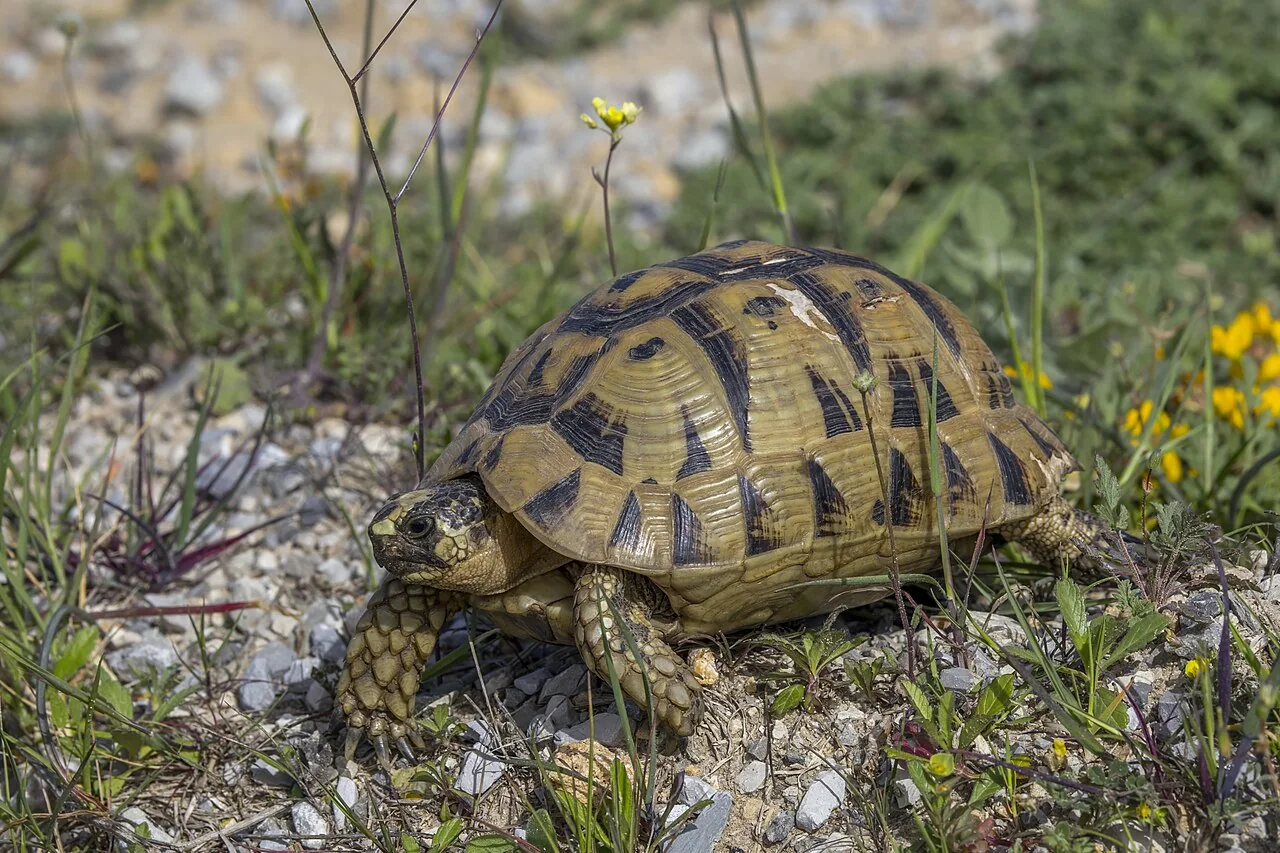
Scientific name
Testudo graeca
Testudo graeca includes several recognised subspecies. Identifying origin matters more than relying on a simple ‘Greek tortoise’ label. [1]
Origin
North Africa, southeastern Europe and southwestern Asia, depending on the subspecies. [1]
- Terrestrial
- Origin is decisive
- Herbivorous
At a glance
| ADULT SIZE | ≈ 13–16 / 18–21 cm LafeberVet distinguishes around 13–16 cm in T. g. graeca and 18–21 cm in ibera; the measurement is not detailed in the care sheet. [2] |
|---|---|
| LIFESPAN | 40 to 80 years 40–80 years in captivity according to Aurora Animal Hospital; a general estimate, not a guarantee applicable to every origin. [3] |
| LIFESTYLE | Rhythm according to origin Habitat diversity explains differing seasonal behaviours. [2] |
Adult size
LafeberVet distinguishes around 13–16 cm in T. g. graeca and 18–21 cm in ibera; the measurement is not detailed in the care sheet. [2]
Lifespan
40–80 years in captivity according to Aurora Animal Hospital; a general estimate, not a guarantee applicable to every origin. [3]
Lifestyle
Habitat diversity explains differing seasonal behaviours. [2]
Housing
AN ENCLOSURE SUITED TO THE CLIMATE
Shelters and ground for digging — Provide shelters, ground that allows digging and a secure outdoor enclosure when the climate is suitable. Fencing must also keep dogs out. [3]
Provide shelters, ground that allows digging and a secure outdoor enclosure when the climate is suitable. Fencing must also keep dogs out. [3]
Care parameters
TEMPERATURES · DAY AND NIGHT
According to origin and season — No single range adopted. Subspecies, age and season must be established before setting instructions.
UVB
Exposure to be adapted — Suitable exposure is essential to the husbandry plan. [3] Distinguish visible light, UVB and sunlight filtered through glass.
Humidity
According to population — References differ between populations. [2] A general value does not necessarily describe a juvenile’s shelter or microclimate.
Day/night temperatures
No single range adopted. Subspecies, age and season must be established before setting instructions.
Humidity
References differ between populations. [2] A general value does not necessarily describe a juvenile’s shelter or microclimate.
UVB
Suitable exposure is essential to the husbandry plan. [3] Distinguish visible light, UVB and sunlight filtered through glass.
Feeding
VARIED, FIBROUS PLANTS
Plan a varied, fibrous plant-based diet, with access to clean, shallow water. The clinical care sheet must not become an automatic supplement dosage. [3]
Feeding
Plan a varied, fibrous plant-based diet, with access to clean, shallow water. The clinical care sheet must not become an automatic supplement dosage. [3]
Behaviour and precautions
Not all tortoises called Greek tortoises hibernate. The RVC particularly highlights differences in North African populations: have the animal identified before any seasonal decision. [4]
Useful records
Archive documented provenance and former scientific names without confusing them with confirmed identification. Record weight, activity, food and temperatures at the same locations. These observations help prepare an individualised programme; this profile does not claim to cover every subspecies.
Protecting the enclosure and shell
Aurora recommends an outdoor enclosure secured against predators and dogs, with opportunities to retreat and burrow. The shell is a living structure: do not paint it or drill it to attach a tether. [3]
Glass and plastic can block UVB: visible light through a window therefore does not guarantee the intended exposure. The equipment and access to shaded areas must be planned together. [3]
Checklist
- Clarify subspecies and origin.
- Secure outdoor access.
- Prepare seasonal decisions.
Observations to record
- Weight
- Feeding
- Activity
- Seasons
The app provides individual animal records. Check which features are available for your animal in the released version.
Related guides
Original guides in French
Sources
Document-based overview; not a substitute for veterinary advice.
- The Reptile Database — Testudo graeca
Source accessed - Pollock et Kanis, LafeberVet, 2015 — Greek or spur-thighed tortoise
Source accessed - Aurora Animal Hospital — Greek Tortoise Care, Dayna Willems DVM
Source accessed - Royal Veterinary College — Mediterranean tortoise care
Source accessed