
Scientific name
Thamnophis radix
Other names: Eutainia radix · Thamnophis radix haydeni · Thamnophis radix radix
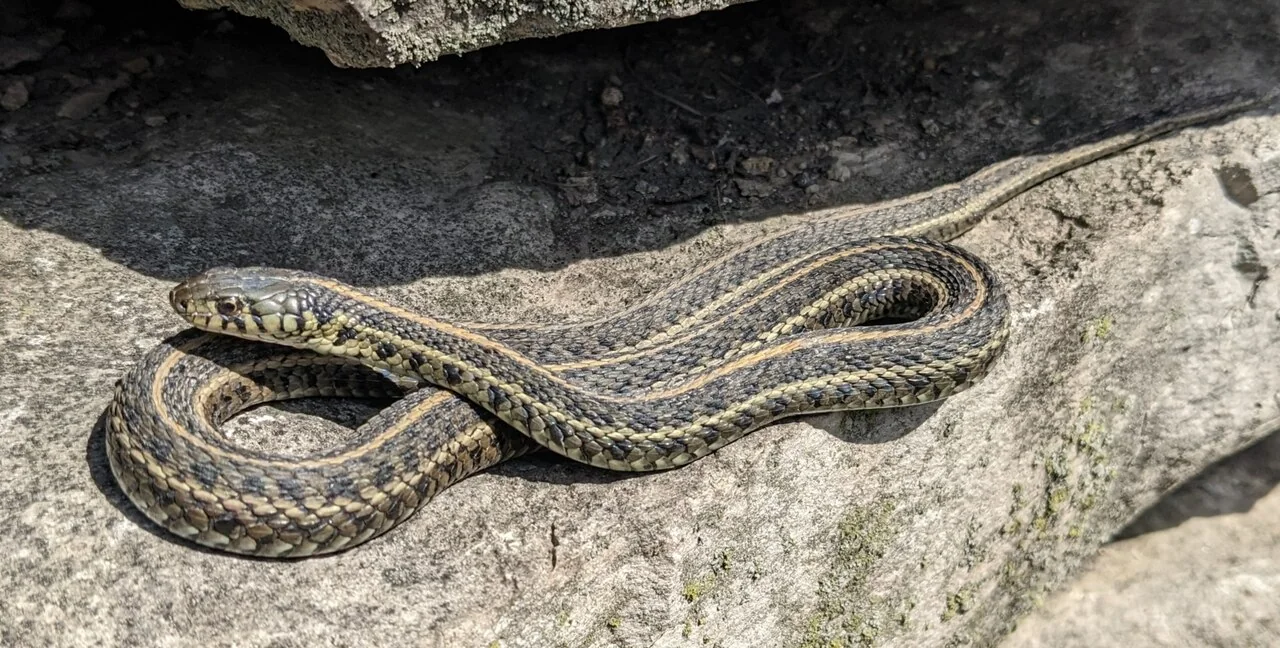
Thamnophis radix is a snake of the North American Great Plains. The former names Thamnophis radix haydeni and Thamnophis radix radix appear in the synonymy; no subspecies is retained in The Reptile Database consulted. [1] Its proximity to water must not lead to treating it as a fish or reducing its diet to fish alone.
Origin
Southern Canada and central United States, with peripheral populations and differing local situations. [1]
- Live young
- Thamnophis radix
- Documented menu
Documentary overview: identity checked; natural observations and captive practices attributed separately. Undocumented limits remain explicit.
At a glance
| SIZE | ≈ 40–70 cm Usual total length; larger possible [2]. |
|---|---|
| LIFESPAN | ≈ 8,5 years reported One captive individual, not an average [2]. |
| LIFESTYLE | Prairies and water Grassland environments [3]. |
Adult size
Usually approximately 40–70 cm, with individuals exceeding 1 m in ADW; snake length including the tail, not to be confused with snout–vent measurement. [2]
Lifespan
ADW reports a captive individual that lived almost 8,5 years. This is a documented case, not an average expectancy or a biological limit. [2]
Lifestyle
Prairies and other grassland areas, often near water; activity varies with thermal conditions. [2][3]
Housing
SPACE TO ADAPT
Full extension — RSPCA reference point for the group [4].
The RSPCA requires garter snakes to be able to stretch out fully. This general group recommendation must be adapted to individual size. [4]
Care parameters
HEATING
28–32 °C — General RSPCA guide [4].
COOL
22–24 °C — General RSPCA guide [4].
Humidity
50–60 % — General air reference point; ground not waterlogged [4].
Heating zone
28–32 °C [4] RSPCA reference point for garter snakes, not a study specific to T. radix.
Cool area
22–24 °C [4] Measure separately from the basking point.
Air humidity
50–60 % [4] General RSPCA reference point; retain a real terrestrial area that is not waterlogged.
Feeding
ZOO MENU
Earthworms and small mice at Columbus; attributed practice [3].
Identify stripes without inventing a lineage
ADW places the lateral stripes on the third and fourth scale rows; overall colour remains variable. [2] Observing several characteristics is therefore preferable to the mere presence of a yellow line. Keeping the former name haydeni in the history may help interpret an invoice, but does not justify creating a current subspecies in the record. A commercial colour name and a geographical identity must remain two distinct pieces of information.
Adult size, lifespan and lifestyle
Usually approximately 40–70 cm, with individuals exceeding 1 m in ADW; snake length including the tail, not to be confused with snout–vent measurement. [2]
ADW reports a captive individual that lived almost 8,5 years. This is a documented case, not an average expectancy or a biological limit. [2]
Prairies and other grassland areas, often near water; activity varies with thermal conditions. [2][3]
A prairie landscape
Columbus Zoo describes prairies and meadows near ponds, streams or marshes. [3] The setup must nevertheless offer more than a central water container. Reserving terrestrial passages, shelters and an area to observe locomotion allows actual enclosure use to be understood. Very dense decor may conceal poor access: following a complete route is more informative than simply noting that the snake is near the pool.
Activity and season are not a cooling recipe
ADW reports changing activity times with heat and differences between regions. [2] This finding explains why “diurnal” does not describe every emergence of every individual. It does not provide a winter temperature to apply automatically. Keep measurements and observation times before changing the climate; a lasting activity decrease must be placed within the animal’s overall condition.
Land, water and cleaning
The RSPCA recommends drinking water and an opportunity to bathe, with a dry terrestrial area and shelters under different conditions. [4] Plan how to change water without opening every exit widely. A stable, non-slip exit must remain available even if the level changes. Theoretical minimum dimensions must not obscure the space occupied by the pool: check what actually remains for stretching out and moving.
An example of an institutional menu
At Columbus, the animals receive earthworms and small mice. [3] This is that institution’s practice, not a published complete proportion or proof that every individual immediately accepts these foods. Ask for the feeding history at transfer and prepare the corresponding resources before arrival. Meal observation must identify the quantity swallowed, especially if several snakes are present; an absence of leftovers is insufficient.
Fish and vitamin B 1
Merck documents thiamine deficiency in fish-eating snakes receiving fish rich in thiaminase or deficient in this vitamin. [5] Adding “thawed” to a packet does not solve this nutritional problem. Identifying fish and having the menu assessed is more useful than randomly alternating species. If tremors or coordination problems occur, seek veterinary advice promptly; do not choose supplementation from a general profile.
Births and juvenile independence
The zoo describes live births, generally 10–20 young per litter, which receive no subsequent parental care. [3] This observation is not a production target. Preparing first meals and inspectable housing is part of the project before any reproductive introduction. American seasonal dates do not become automatic deadlines for a breeding setup elsewhere under different lighting.
A widespread species, vulnerable populations
Columbus participates in a conservation programme in Ohio. [3] A broad overall range therefore does not mean that every local population is abundant or available for collection. Choose documented captive origin, do not capture or release, and check rules applicable where the animal is kept. Also prepare for possible separation and individual monitoring: organisational flexibility matters more than a general reputation as an easy snake.
Checklist
- Keep former names.
- Provide an easy-to-clean pool.
- Identify foods precisely.
Observations to record
- Meals
- Weight
- Sheds
- Activity
The app provides individual animal records. Check which features are available for your animal in the released version.
Related guides
Original guides in French
Sources
Document-based overview; not a substitute for veterinary advice.
- The Reptile Database — Thamnophis radix
Source accessed - Animal Diversity Web — Thamnophis radix
Source accessed - Columbus Zoo — Plains Gartersnake
Source accessed - RSPCA — How to take care of your Garter snake
Source accessed - Merck Veterinary Manual — Nutritional, Metabolic, and Endocrine Diseases of Reptiles
Source accessed