
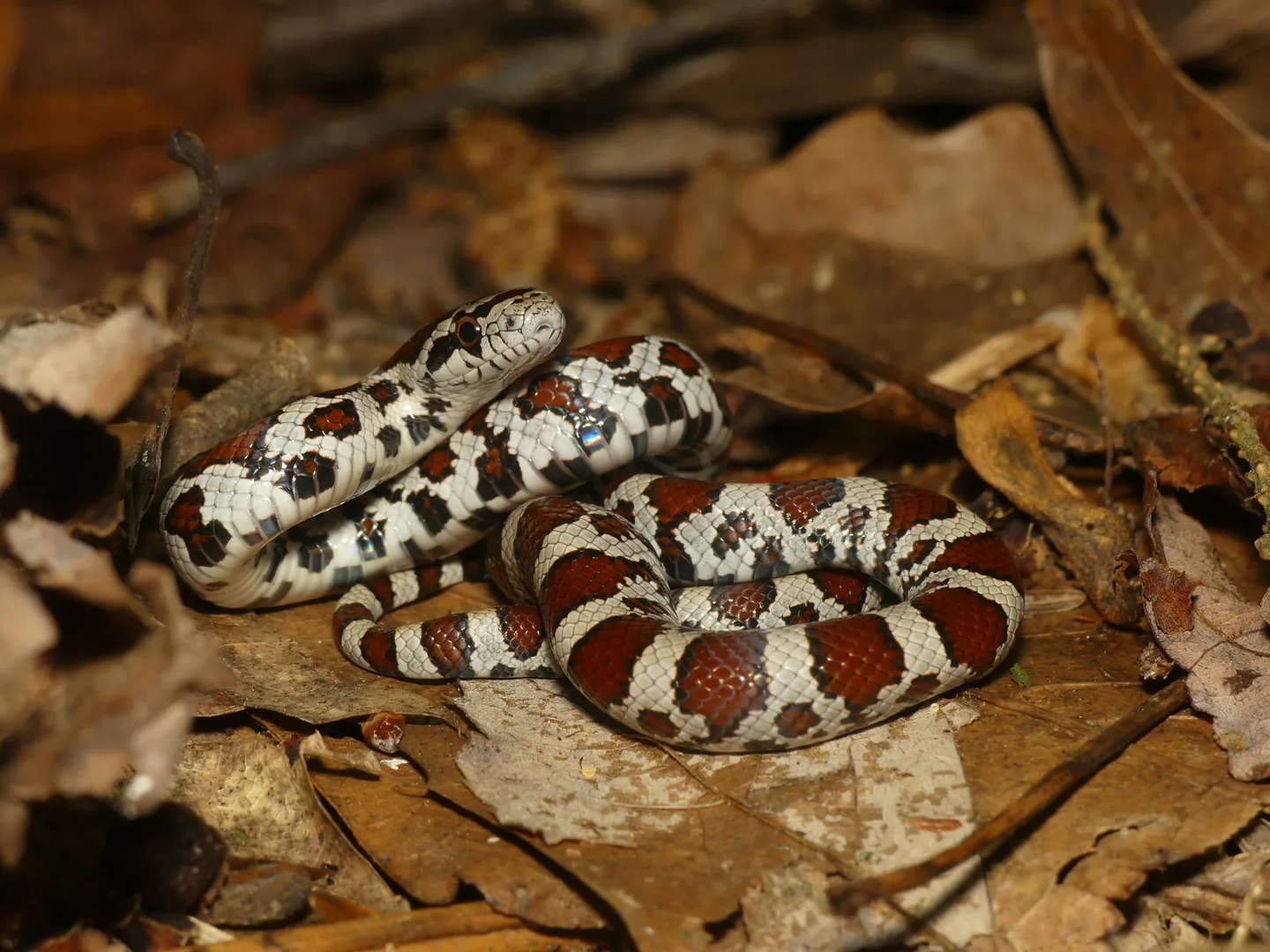
Scientific name
Lampropeltis triangulum
This profile concerns Lampropeltis triangulum. The name ‘milk snake’ has also been used for taxa now separated. [1][2]
Origin
Canada, the United States and northern Mexico. [1]
- Terrestrial
- Constrictor
- Shelters
At a glance
| ADULT SIZE | 60–90 cm Usual length in the Canadian report; not a worldwide average [2]. |
|---|---|
| LIFESPAN | More than 21 years An adult lived an additional 21 years in a zoo; initial age unknown [2]. |
| LIFESTYLE | Under shelters A discreet species of varied environments [2]. |
Adult size
Usually 60–90 cm in the Canadian report; a maximum of 132 cm is reported in its summary. [2]
Lifespan
An adult captured in the wild lived another 21 years at Philadelphia Zoo; its total age was greater. [2]
Lifestyle
Discreet, using many shelters on the ground. [2]
Housing
GROUND-LEVEL SHELTERS
≈ 122 × 61 × 61 cm — General ReptiFiles reference, length × depth × height, to be adjusted to the snake [3].
ReptiFiles links habitat length to snake length and provides for several retreats. [3]
Care parameters
WARM SURFACE · DAY
29–32 °C — Surface, according to the general milksnakes care sheet [3].
COOL AREA · DAY
≈ 24–27 °C — Conversion of 75–80 °F; night around 21–24 °C [3].
Humidity
40–60 % — General ReptiFiles reference with a humid hide [3].
Warm surface
29–32 °C. [3] General reference from the milksnakes care sheet, which includes this species.
Cool area
Around 24–27 °C. [3] Rounded conversion of the source’s 75–80 °F.
Humidity
40–60 %. [3] A humid hide supplements ambient conditions.
Night
Around 21–24 °C. [3] Rounded conversion of 70–75 °F.
Feeding
AN APPROPRIATE DIET
ReptiFiles suggests whole thawed prey, particularly suitable rodents. [3]
Feeding
ReptiFiles suggests whole thawed prey, particularly suitable rodents. [3]
Behaviour and precautions
The sizes and parameters of tropical populations formerly classified under triangulum are not automatically those of this North American species. [1][2]
Useful records
Record mass, accepted or refused meals, sheds and probe locations. A measurement benefits from being accompanied by its time and zone. Compare observations over time; an unusual change warrants veterinary advice.
Checklist
- Check closures and supports.
- Identify every measurement zone.
- Keep provenance data.
Observations to record
- Meals
- Weight
- Sheds
- Temperatures
The app provides individual animal records. Check which features are available for your animal in the released version.
Related guides
Original guides in French
Sources
Document-based overview; not a substitute for veterinary advice.
- The Reptile Database — Lampropeltis triangulum
Source accessed - COSEWIC — Eastern milksnake, assessment and status report (2014)
Source accessed - ReptiFiles — Milksnake Care Sheet
Source accessed