
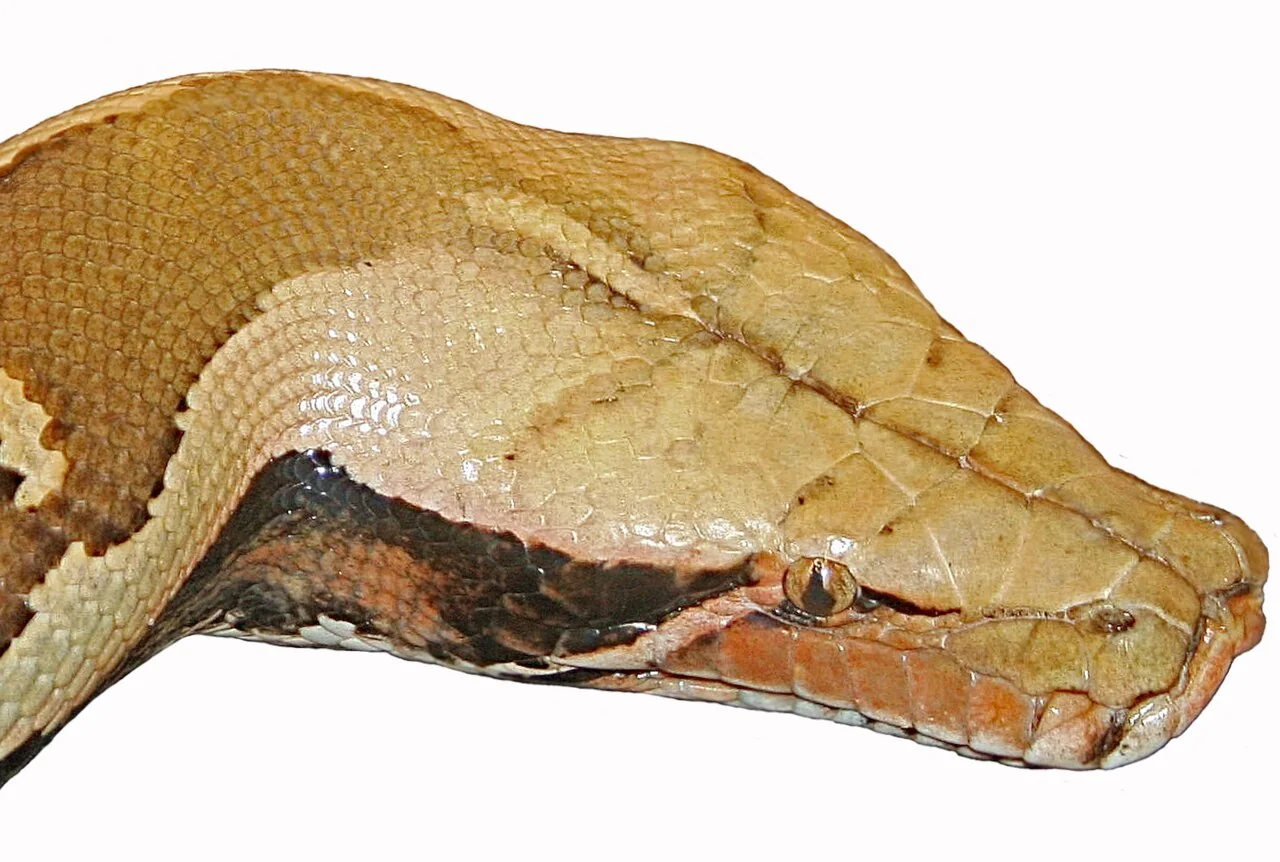
Scientific name
Python breitensteini
Other names: Python curtus breitensteini
This Borneo python belongs to the short-tailed species group but has its own identity. Size comparisons and recommendations shared by the group must remain distinct from observations made on this species. [1][2]
Origin
Borneo, particularly Kalimantan, Sabah and Sarawak. [1]
- Borneo
- Short-tailed python
- Heavy body
Borneo and current identity; attributed husbandry frameworks; total length distinguished from sources without a convention.
At a glance
| ADULT SIZE | 1,5–1,8 m Dudley Zoo; TL/SVL unspecified [2]. |
|---|---|
| LIFESPAN | 20–30 years Captive educational reference point [2]. |
| LIFESTYLE | Crepuscular Activity at dawn and dusk [2]. |
Adult size
Dudley Zoo gives 1,5–1,8 m without a measurement convention; VPI publishes total lengths varying by sex. [2][3]
Lifespan
20–30 years in captivity in Dudley Zoo’s educational profile; this is not a cohort average. [2]
Lifestyle
Mainly crepuscular activity according to Dudley Zoo; an ambush hunter in the VPI account. [2][3]
Housing
A SUITABLE HABITAT
Ground and shelters — Security and ventilation [3].
A secure, ventilated and accessible space for a broad-bodied animal; dimensions to adapt to its actual build. [3]
Care parameters
WARM SPOT · DAY
30–31 °C — VPI conversion, 86–88 °F [3].
COOL AREA · DAY
26–28 °C ambient — VPI conversion, 78–82 °F [3].
Humidity
Approximately 60 % — Grouped husbandry reference point [4].
Ambient conditions
Approximately 26–28 °C Rounded conversion of 78–82 °F in VPI’s practice framework. [3]
Locally heated zone
Approximately 30–31 °C 86–88 °F in the same framework; measure the accessible surface. [3]
Humidity
Approximately 60 %, a group reference point The Blood Cell’s captive account for short-tailed pythons, not a field study. [4]
Feeding
MONITORED FEEDING
A Borneo species, not a curtus morph
The Reptile Database treats Python breitensteini as a species and lists Python curtus breitensteini among the former combinations. [1] Historical profiles mentioning only “blood python” must therefore be read carefully. Keeping the scientific name, transfer documents and stated provenance allows the relevant information to be identified. A pale colour form selectively bred in captivity is not a fourth taxon. Photographed colour also depends on lighting; it is insufficient to certify identity.
Adult size, lifespan and lifestyle
Dudley Zoo gives 1,5–1,8 m without a measurement convention; VPI publishes total lengths varying by sex. [2][3]
20–30 years in captivity in Dudley Zoo’s educational profile; this is not a cohort average. [2]
Mainly crepuscular activity according to Dudley Zoo; an ambush hunter in the VPI account. [2][3]
Size: avoid incompatible figures
Dudley Zoo lists 1,5–1,8 m without specifying total or snout–vent length. [2] The Barkers, by contrast, specify total lengths and sex differences in their VPI profile. [3] These data do not come from the same sample and are not merged into a false average. Regularly measuring the individual using a non-restrictive method recorded in the log is more informative than comparison with a stated maximum. Housing must also account for body width and the ability to turn around.
Humid habitats with shelters
Dudley Zoo places the species in Borneo’s humid forests, particularly near swamps and watercourses. It describes activity mainly at dawn and dusk. [2] This picture does not mean that all captive ground must be saturated. Organising passages, cover and inspectable areas allows a secretive snake to be monitored without routinely taking it out. Observation can occur at comparable times; an animal stationary at midday does not sum up its behaviour over twenty-four hours.
Building an accessible habitat
VPI emphasises secure, ventilated housing. [3] In practice, provide access allowing water and soiling to be removed without unnecessarily lifting the animal. Heavy elements must remain stable and doorways sufficiently clear. Weighing or transport equipment must be chosen before it is needed. Do not turn old containers described by keepers into a welfare minimum: a dimension published without a study does not demonstrate that a larger animal will have enough space.
Climate: keep a coherent framework
The Barkers describe ambient conditions of 78–82 °F, approximately 26–28 °C, and a small area heated to 86–88 °F, approximately 30–31 °C. [3] The cover retains this practice framework without adding an extreme borrowed from another species. The Blood Cell reports approximately 60 % humidity for the group, with attention to air exchange. [4] Taking readings at snake level and distinguishing air, surface and shelter allows the setup to be checked; the thermostat alone is not a complete record.
Feeding: document portions
VPI describes acceptance of rodents and the risk of overfeeding in this ambush python. [3] The Blood Cell also emphasises the value of adapting meals to body condition in short-tailed species. [5] Keeping an individual history avoids applying a frequency based on length alone. Record date, prey type, acceptance and comparable weighings. A naturally thick snake may require precise assessment of body shape; no universal target adult weight is inferred from published large specimens.
Breeding and juvenile traceability
The species is oviparous according to The Reptile Database. [1] The CITES manual groups several short-tailed-python parameters and calls for evidence when captive origin is declared. [6] We do not convert these grouped tables into an expected egg count for each female. For planned breeding, assign identifiers to parents and clutches, keep dates and plan separate monitoring of first meals. A “captive-born” statement warrants a coherent history, not merely a commercial assertion.
Daily monitoring and useful limits
Dudley Zoo notes pressure from collection and habitat loss. [2] In the planned housing project, this information reinforces the value of provenance documents. Daily recording of water, substrate, shedding, meals and behaviour helps explain a change to the veterinarian. Repeated soaking or altered breathing must not automatically be interpreted as a simple preference. Prepare observations, photographs and actual parameters. The educational lifespan is a horizon of responsibility, without promising a duration for the animal acquired.
Checklist
- Check identity and documented captive origin.
- Provide access suited to a heavily built body.
- Keep a single measured thermal framework.
Observations to record
- Manual ration history.
- Weight and body shape under comparable conditions.
- Sheds, substrate condition and shelter use.
The app provides individual animal records. Check which features are available for your animal in the released version.
Related guides
Original guides in French
Sources
Document-based overview; not a substitute for veterinary advice.
- The Reptile Database — Python breitensteini
Source accessed - Dudley Zoo and Castle — Borneo Short-Tailed Python
Source accessed - David et Tracy Barker, VPI — Borneo Pythons, archive consultée
Source accessed - The Blood Cell — Humidity, expérience d’élevage
Source accessed - The Blood Cell — Feeding, expérience d’élevage
Source accessed - CITES / TRAFFIC — Inspection Manual, 2013, pages 46–47
Source accessed