
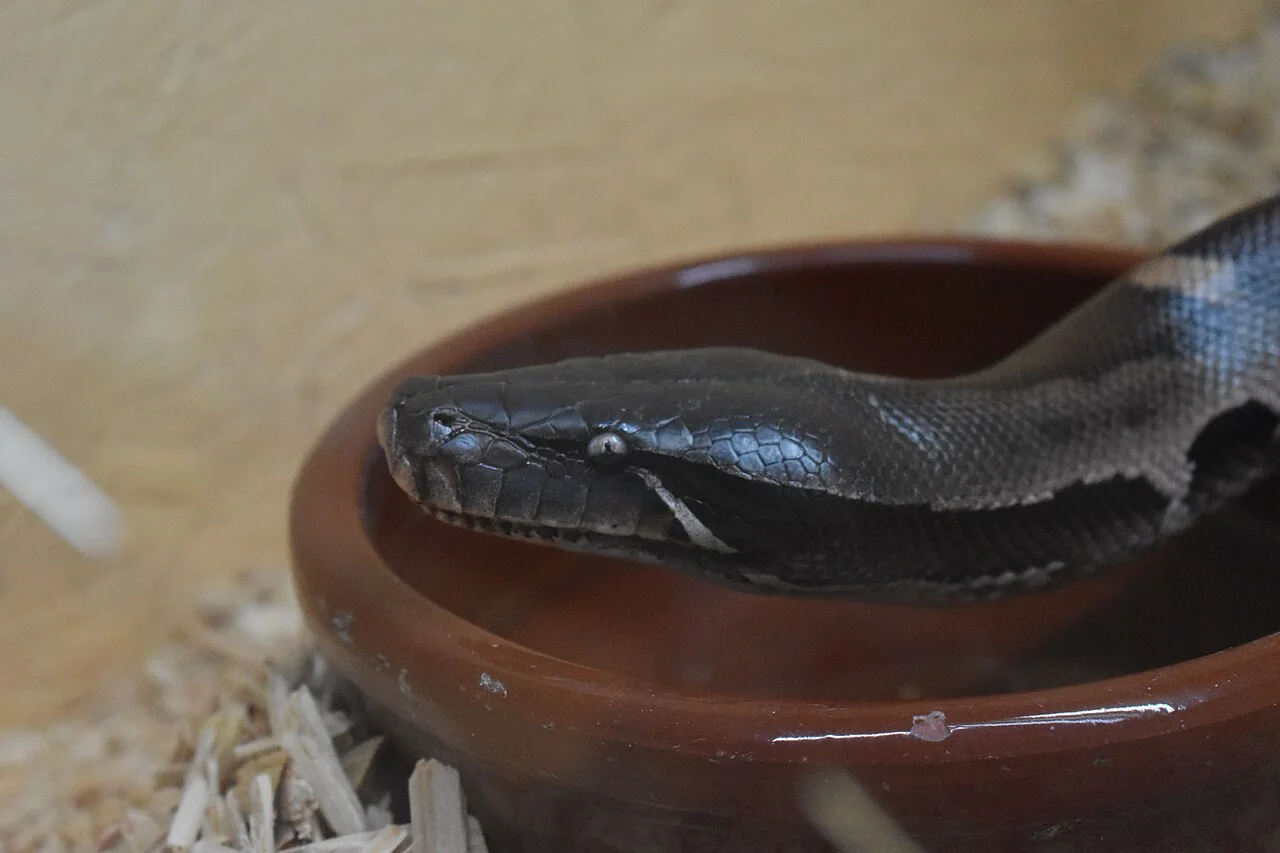
Scientific name
Python curtus
Python curtus is distinct from P. brongersmai and P. breitensteini, separated at species rank following genetic and morphological study. [1][4]
Origin
Sumatra and Bangka, Indonesia. [1]
- Terrestrial
- Heavy body
- Sumatra
At a glance
| ADULT SIZE | ≈ 1,2–1,5 m Captive reference shared by the three short-tailed pythons [2]. |
|---|---|
| LIFESPAN | Not established No species-specific lifespan sufficiently documented in the selected sources. |
| LIFESTYLE | Ground-dwelling Terrestrial python with a particularly thick body [2]. |
Adult size
Around 1,2–1,5 m in captive adults of the group studied by Kara Norris; some individuals exceed this range. [2]
Lifespan
A reliable lifespan specific to Python curtus is not established by the selected references.
Lifestyle
A terrestrial python with a heavy body. [2]
Housing
A SPACIOUS BASE
From 122 × 61 × 61 cm — Reptile Cymru reference for the group, length × depth × height; enlarge according to the individual [3].
Reptile Cymru suggests at least 122 × 61 × 61 cm for this group, to be enlarged according to body size. [3]
Care parameters
AMBIENT AIR · DAY
≈ 27–28 °C — Kara Norris’s captive practice [2].
AMBIENT AIR · NIGHT
≈ 26 °C — Same breeding protocol, conversion of 78 °F [2].
Humidity
60–70 % — Air humidity used by the breeder, without soaking the environment [2].
Ambient air
Around 27–28 °C by day. [2] Rounded conversion of 80–82 °F; breeder experience.
Local heating
30–31 °C when provided. [2] 86–88 °F; air/surface nature not specified.
Humidity
60–70 %. [2] Air humidity, with ventilation.
Night
Around 26 °C. [2] Conversion of 78 °F; practice described by the author.
Feeding
AN APPROPRIATE DIET
Appropriately sized rats; Kara Norris uses dead prey and adjusts meals to limit weight gain. [2]
Feeding
Appropriately sized rats; Kara Norris uses dead prey and adjusts meals to limit weight gain. [2]
Behaviour and precautions
The trade term ‘blood python’ can cover several species. Keeping identification and provenance avoids confusion. [1][4]
Useful records
Record mass, accepted or refused meals, sheds and probe locations. A measurement benefits from being accompanied by its time and zone. Compare observations over time; an unusual change warrants veterinary advice.
Checklist
- Check closures and supports.
- Identify every measurement zone.
- Keep provenance data.
Observations to record
- Meals
- Weight
- Sheds
- Temperatures
The app provides individual animal records. Check which features are available for your animal in the released version.
Related guides
Original guides in French
Sources
Document-based overview; not a substitute for veterinary advice.
- The Reptile Database — Python curtus
Source accessed - Kara Norris, Reptiles Magazine — Blood and Short-tailed Python Care Sheet
Source accessed - Reptile Cymru — Short Tailed Pythons and Blood Python Care Sheet
Source accessed - Keogh, Barker & Shine (2001) — Systematics of the Python curtus group, ANU
Source accessed