
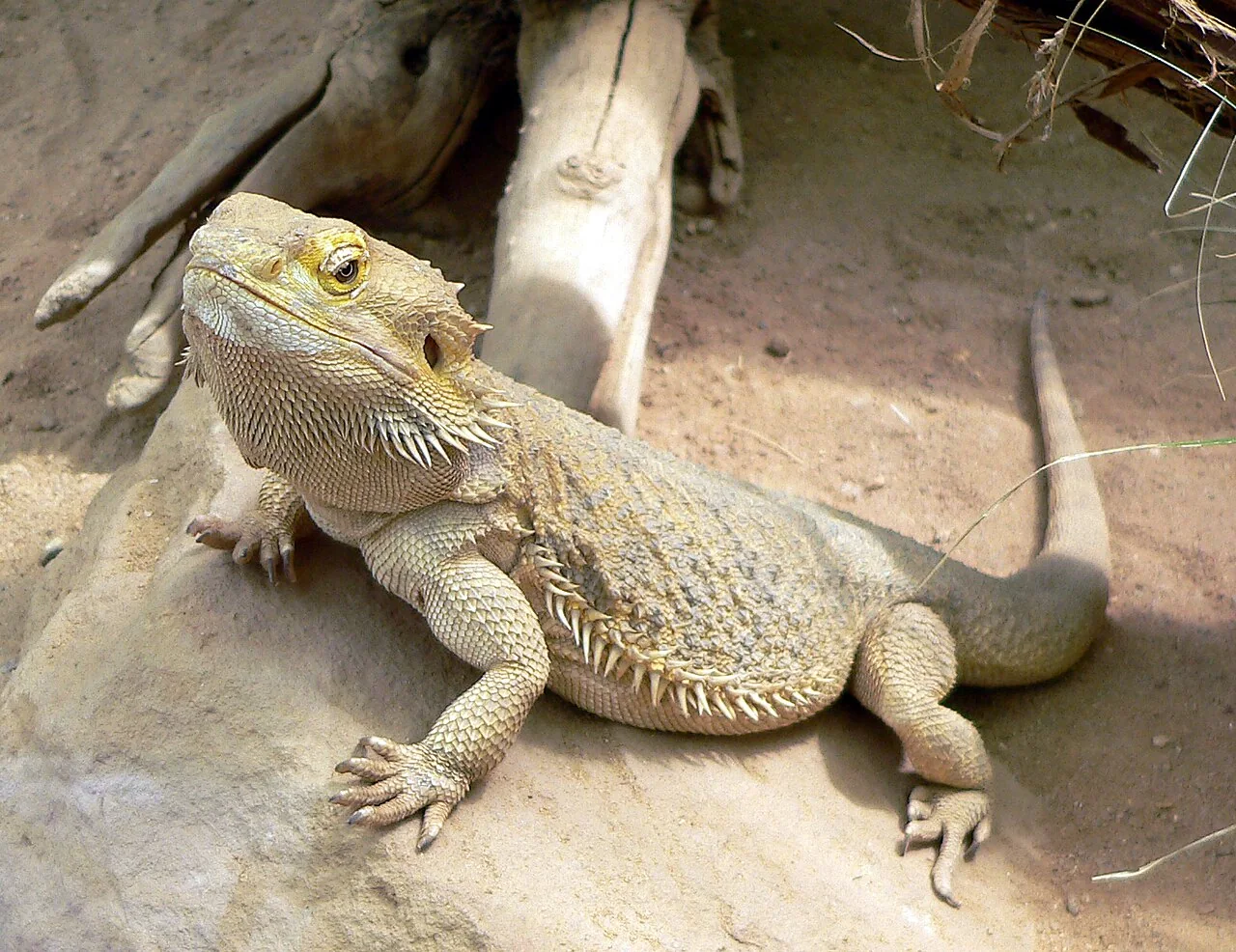
Scientific name
Pogona vitticeps
This profile concerns Pogona vitticeps, the central bearded dragon. The same references do not automatically apply to other Pogona species. [3]
Origin
Arid and semi-arid areas of central and eastern Australia. [3]
- Diurnal
- Omnivorous
- Ground-dwelling and a climber
- Individual housing
At a glance
| ADULT SIZE | 45–56 cm From the nose to the tip of the tail [3]. |
|---|---|
| LIFESPAN | 7–12 years VCA reference; variation between sources [3]. |
| LIFESTYLE | Ground-dwelling, also climbs Diurnal species [3]. |
Adult size
45–56 cm from the nose to the tip of the tail according to VCA. [3]
Adult weight
No sufficiently contextualised adult weight range is available in the selected sources; monitor mass alongside length and body shape rather than a target in grams.
Lifespan
7–12 years in captivity according to VCA; the RSPCA gives 10–15 years or more. These estimates are not guarantees for an individual. [1][3]
Lifestyle
Diurnal; adults are mainly ground-dwelling but also use elevated sites. Young animals readily climb. [3]
Experienced keeper
Editorial assessment: the space required, the lighting gradient and changes in diet demand thorough preparation. A first project remains possible with guidance and reliable measurements. [1][2]
Housing
SPACE TO CHOOSE
120 × 60 × 60 cm — RSPCA minimum; length × depth × height [1].
RSPCA minimum for an adult: 120 × 60 × 60 cm, length × depth × height; an accessible basking site, shade and shelters. [1]
Care parameters
BASKING · DAY
38–42 °C — Basking site [1].
COOL AREA · DAY
22–26 °C — Accessible and measured [1].
UVB
UVI 3–5 → shade — Measure at the animal’s level [1].
Humidity
30–40 % — Measure in the cool area [1].
Daytime basking
38–42 °C [1] Surface of the basking site.
Cool area
22–26 °C during the day [1] Measure separately.
Night
Do not fall below 20–22 °C [1] Darkness.
UVB
UVI 3–5 in the warm area → 0 in shade; 12 h/12 h [1] Measure at the animal’s height; have sensitive morphs assessed.
Humidity
30–40 % at the cool end [1] Check ventilation.
Feeding
A DIET THAT CHANGES WITH AGE
Plant foods and insects; diet and feeding frequency change with age [2].
Enclosure setup and water
For a healthy adult, the RSPCA describes a suitable soil/sand mixture or rough surfaces with opportunities to dig. Avoid calcium sand and wood shavings. Replace the water in a shallow dish in the cool area daily. [1]
Feeding a juvenile and then an adult
VCA describes a mixed diet: young animals eat more insects and adults more plant foods. The guide suggests one to two meals daily for young animals; in adults, the feeding interval varies from 24 to 72 hours according to appetite and the animal’s condition. [2]
Vary suitable leaves and vegetables, keep fruit occasional and feed insects properly before offering them. Avoid wild prey, particularly toxic fireflies. Calcium and vitamins must be considered alongside the diet, UVB and body condition; no medical dose is provided here. [2]
Behaviour and cohabitation
VCA advises housing bearded dragons alone: competition and injuries can arise after a period of apparently peaceful coexistence. A dark beard can accompany several situations, including threats, breeding or illness; its colour alone does not establish a conclusion. [3]
Observe movement, weight-bearing and use of the different areas. In the log, describe what changes and the circumstances of the observation: position in the habitat, a recent meal, handling or changes to the furnishings. This method avoids interpretations based on an isolated sign.
Egg laying and preparing a breeding project
The species lays eggs, and a female can produce unfertilised eggs. Chicago Exotics describes a laying site with moist substrate for digging; restlessness with repeated searching for a site may precede laying. [4]
Egg production draws on the female’s resources. Plan body-condition monitoring, housing for the young and access to a veterinarian before starting a project. This profile sets no universal weight for maturity and prescribes neither cooling nor an induction schedule. Persistent laying behaviour accompanied by a deterioration in general condition requires assessment. [4][5]
Recognise abnormal changes
VCA describes a healthy animal as alert, able to support its body and with a clean vent. Discharge or oral lesions, weakness and a marked change in body shape warrant a consultation. [3] Tremors or limb deformities are also concerning. [1]
Record food intake, stools, activity and measurements each day; note the date lamps were installed. Linking weight changes to observations and changes in food helps discussions about husbandry with the veterinarian, without assuming that reduced activity is normal brumation.
Checklist
Observations to record
- Meals by category
- Weight and body shape
- Activity and weight-bearing
- Droppings
- UVB and temperatures
- Observed egg laying
The app provides individual animal records. Check which features are available for your animal in the released version.
Related guides
Related guides
Original guides in French
Sources
Document-based overview; not a substitute for veterinary advice.
- RSPCA — Caring for your Bearded Dragon
Source accessed - VCA Animal Hospitals — Bearded Dragons: Feeding
Source accessed - VCA Animal Hospitals — Bearded Dragons: Owning
Source accessed - Chicago Exotics Animal Hospital — Bearded Dragon Care
Source accessed - MSD Veterinary Manual — Reproductive Diseases of Reptiles
Source accessed