
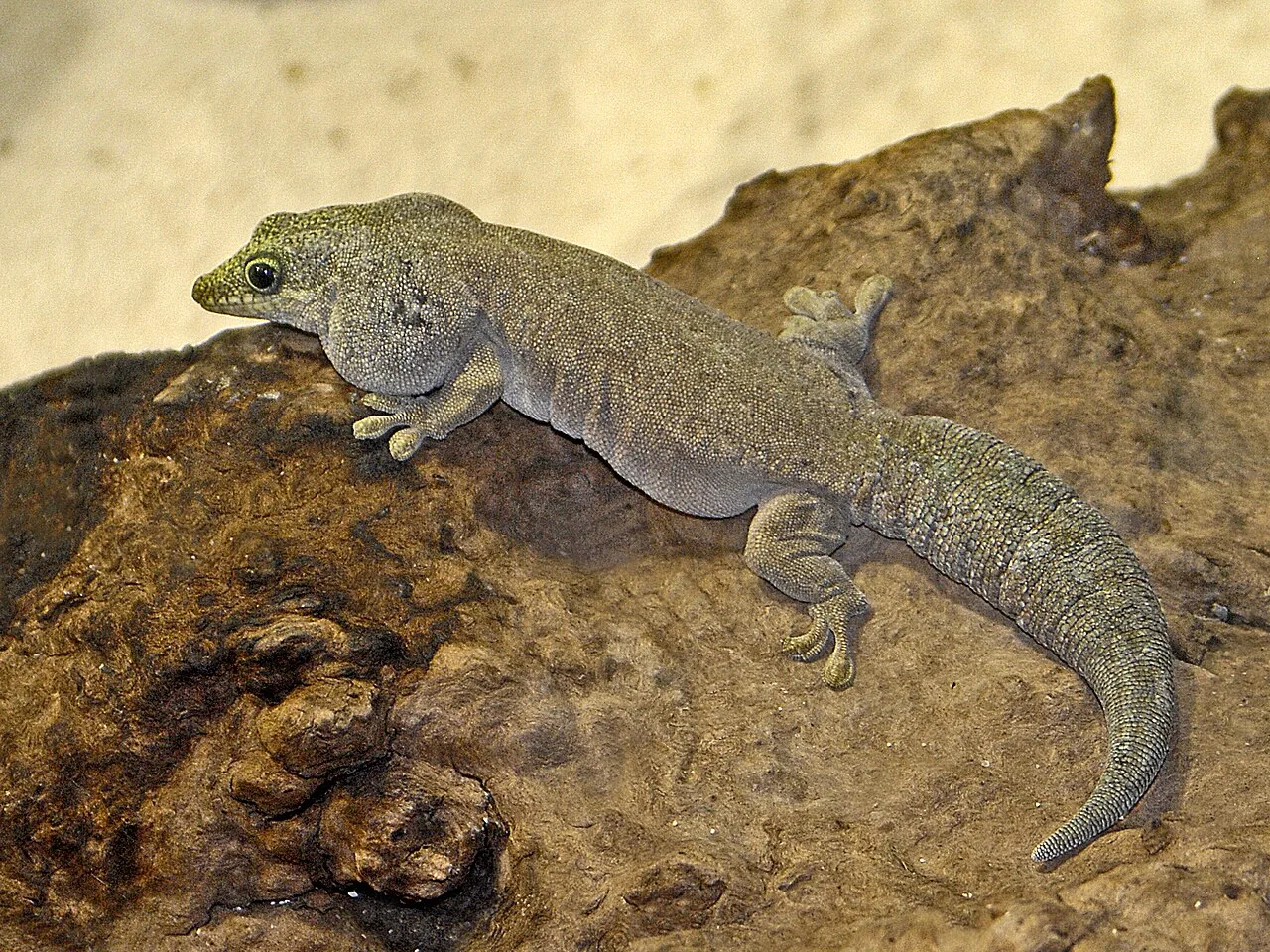
Scientific name
Phelsuma standingi
This large Phelsuma changes appearance with age: the pronounced bands of juveniles become a more irregular pattern in adults. It inhabits dry Malagasy forests [2][3].
Origin
South-western Madagascar; the type locality has been clarified near the Onilahy [1].
- Arboreal
- Diurnal
- Omnivorous
At a glance
A large diurnal gecko from south-western Madagascar, associated with dry, spiny vegetation [1][3][4].
| ADULT SIZE | 20–28 cm Total length according to Liberec Zoo [4]. |
|---|---|
| ACTIVITY | Diurnal Arboreal in dry vegetation [3][4]. |
| DIET | Omnivorous Insects and plant matter described at the zoo [4]. |
Adult size
20–28 cm total length, including the tail, according to Liberec Zoo; this is not trunk length alone [4].
Lifespan
Henry Vilas Zoo gives 12 years in a zoo; ReptiFiles suggests 15–20 years with good care. These values of different kinds are not a shared average [2][3].
Lifestyle
Arboreal and diurnal, in dry, spiny vegetation; males defend their space [3][4].
Housing
ARRANGING ITS HABITAT
60 × 60 × 120 cm — ReptiFiles minimum for one individual; structure the height [2].
ReptiFiles recommends at least 60 × 60 × 120 cm for one individual and more if possible; the enclosure must be structured throughout its height [2].
Care parameters
BASKING PERCH
32–35 °C — ReptiFiles captive reference point [2].
NIGHT
22–23 °C — Night-time values from the same guide [2].
Humidity
40–75 % — Ambient average; retain daily variation [2].
Basking perch
32–35 °C [2] Probe fixed to the support beneath the lamp, according to ReptiFiles.
Night
22–23 °C [2] Published captive reference point, distinct from daytime maxima.
Humidity
40–75 % [2] Average in the middle of the terrarium, varying during the day.
Feeding
FEEDING AND MONITORING
Suitable prey and plant component; the wild diet remains incompletely described [3][4].
Identity and age-related differences
Phelsuma standingi remains the accepted name in the taxonomic database; no genus change is needed to read older sources [1]. Striped juveniles and mottled adults are not two species. Liberec Zoo describes adhesive pads that enable vertical movement [4]. To identify an animal without a history, associate photographs of the whole body with the previous keeper’s name; colour alone is insufficient.
Adult size, lifespan and lifestyle
20–28 cm total length, including the tail, according to Liberec Zoo; this is not trunk length alone [4].
Henry Vilas Zoo gives 12 years in a zoo; ReptiFiles suggests 15–20 years with good care. These values of different kinds are not a shared average [2][3].
Arboreal and diurnal, in dry, spiny vegetation; males defend their space [3][4].
A dry habitat is not an empty enclosure
Henry Vilas Zoo places the species in dry deciduous forests and spiny thickets [3]. Its arboreal lifestyle remains central: reproducing only sandy ground would miss the supports it uses. Providing solid routes, cavities and visually screened areas helps organise the enclosure. A large front panel does not replace this structure; check that branches do not rotate when the animal puts weight on them before considering the housing ready.
Heat and light available by choice
The ReptiFiles recommendation distinguishes a lit basking area, less-warm zones and a cooler night [2]. Values must be associated with a location, not simply displayed on a thermostat. An adult may occupy very different supports in the same day. Marking measurement points on a photograph of the decor allows comparison after replacing a lamp or moving a branch, without confusing an equipment change with biological variation.
Water and surface maintenance
The humidity reference point covers daily and spatial variation; it does not mean that trees in the natural habitat remain continuously soaked [2][3]. Examining cavities after misting and the condition of resting supports provides information that complements the sensor. Provide elements that can be cleaned without chasing the gecko from shelter to shelter. Dishes and plants must remain inspectable; naturalistic decor is not a maintenance-free system.
Feeding: what is observed and what is assumed
Liberec Zoo mentions invertebrates, nectar, pollen and fruit [4]. Henry Vilas Zoo is more cautious about the precise wild diet, describing it as still incompletely known [3]. This nuance matters: a list of possible foods does not establish their proportions. In captivity, ReptiFiles proposes prey and a preparation for omnivorous geckos [2]. Monitoring the food actually eaten and its composition avoids equating fruit purée with a complete product.
Living in pairs and precautions
Liberec Zoo reports pair living and a local breeding season [4]. ReptiFiles presents pairs as a husbandry practice requiring more space [2]. The editorial choice for straightforward observation is not to impose continuous breeding. When two individuals are present, check separate access to retreats, meals and light. Regular proximity is insufficient to rule out unobtrusive competition.
Eggs and juveniles
The species is oviparous [1]. Henry Vilas Zoo describes one or two eggs per clutch and seasonal breeding, with juveniles receiving no parental care [3]. Liberec also reports two eggs and a period from autumn to early spring in the southern hemisphere [4]. These observations describe the biological cycle; they do not constitute a domestic incubation prescription. Preparing housing and identification for juveniles remains necessary before any breeding attempt.
An ongoing commitment over time
Photographing sheds, recording meals and retaining weight trends helps identify a pattern without seeking a universal weight. The sources’ lifespan figures are not directly comparable: a zoo profile and a practical estimate do not necessarily describe the same population [2][3]. Habitat destruction and collection are reported by the zoo [3]. Documented provenance and captive-born animals therefore have concrete importance.
Checklist
- Prepare several accessible shelters before arrival.
- Check measurements at locations the animal actually uses.
- Keep origin information and individual observations.
Observations to record
- Meals
- Weight
- Sheds
- Temperature
- Humidity
- Behaviour
The app provides individual animal records. Check which features are available for your animal in the released version.
Related guides
Original guides in French
Sources
Document-based overview; not a substitute for veterinary advice.
- The Reptile Database — Phelsuma standingi
Source accessed - ReptiFiles — Standing’s Day Gecko Care
Source accessed - Henry Vilas Zoo — Standing’s Day Gecko
Source accessed - Zoo Liberec — Felsuma Standingova
Source accessed