
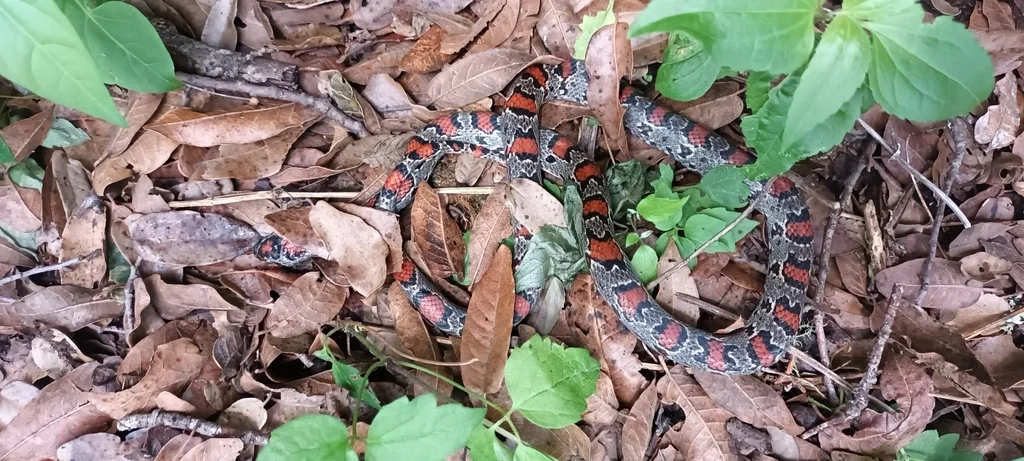
Scientific name
Lampropeltis mexicana
Other names: Lampropeltis mexicana mexicana
Lampropeltis mexicana is a precise species within the Mexican kingsnake group. Its profile must distinguish lineage, locality and colour, particularly when historical names or hybridisation accompany the animal. [1][2]
Origin
Mexico, with San Luis Potosí as the reference region; detailed distribution remains incompletely known and subject to corrections. [1][2]
- Terrestrial
- Lineage to document
- Mexico
Current species distinguished from former taxa greeri, leonis/thayeri and alterna. Explicit TL measurements; Hansen and Cherry accounts attributed without reproducing their older protocols.
At a glance
| ADULT SIZE | 61–91 cm TL Usually according to Sierra Herps; maximum 115,6 cm TL [1][2]. |
|---|---|
| LIFESPAN | Not established here No species-specific average retained. |
| LIFESTYLE | Terrestrial and secretive Rocky shelters, limited field data [2]. |
Adult size
Usually 61–91 cm TL according to Sierra Herps; maximum of 115,6 cm TL in the diagnosis reproduced by The Reptile Database. [1][2]
Lifespan
No average specific to this species sufficiently supported by the references retained.
Lifestyle
A secretive snake associated particularly with rocky shelters; field observations remain limited. [2][3]
Housing
A SUITABLE HABITAT
Cover and refuges — Keep the lineage’s identity and provenance.
Individual housing allowing precise monitoring, with accessible shelters and several measurable zones; no species-specific minimum inferred from a genus profile.
Care parameters
WARM SPOT · DAY
29–32 °C — General Lampropeltis framework [5].
COOL AREA · DAY
21–26 °C — Genus-level reference point [5].
Humidity
To be clarified — Varied habitats; provenance matters [2].
Heating surface
29–32 °C General Lampropeltis framework, to compare with provenance. [5]
Cooler zone
21–26 °C General practical reference point, without species-specific validation here. [5]
Humidity
To clarify for the lineage Habitat diversity does not allow a uniform percentage to be set here. [2]
Feeding
MONITORED FEEDING
Mice; some juveniles are difficult to start according to John Cherry [3].
Defining mexicana among kingsnakes
The former name L. mexicana mexicana corresponds to the current species; CONABIO also lists it as a synonym. Alterna and leonis are distinguished at species rank in the taxonomic reference. [1][4] Therefore do not automatically include greeri, thayeri or every “Mexican kingsnake” in this profile. When creating the record, keep the seller’s original designation and the explained correction. This dual trace helps interpret older publications without erasing the animal’s history.
Adult size, lifespan and lifestyle
Usually 61–91 cm TL according to Sierra Herps; maximum of 115,6 cm TL in the diagnosis reproduced by The Reptile Database. [1][2]
No average specific to this species sufficiently supported by the references retained.
A secretive snake associated particularly with rocky shelters; field observations remain limited. [2][3]
Lineage and appearance: retain evidence
Robert and Eric Hansen at Sierra Herps warn that some hybrids sold as mexicana are difficult to recognise. [2] Coloration is therefore insufficient to certify ancestry. Ask who bred the animal, which parents are known and how the lineage was identified. Clearly separate verified information from a merely passed-on label. Dated photographs show colour development and allow the individual to be recognised; they do not replace written traceability when a breeding project is considered.
Varied habitats, precise refuges
Sierra Herps describes environments ranging from cool, humid mountains to more arid areas; high-altitude individuals are associated with limestone outcrops. [2] A general image of a Mexican desert would therefore be an insufficient starting point. Build a habitat offering real cover, inspectable access and usable area suited to the adult. For every hide, check that the animal can fit inside and leave freely. Heavy supports must remain stable even when substrate moves.
Climate: state what remains to be clarified
The table uses practical reference points for the genus, not measurements establishing the needs of this species alone. [5] Provenance and conditions already used by the breeder must complement this framework before arrival. Measure shelters and accessible surfaces, then record night-time changes. Do not try to infer ideal humidity from a city or altitude alone. A trial setup identifies differences between the heating setpoint and the situation the snake actually encounters.
Feeding and starting juveniles
John Cherry describes adults fed farmed mice and juveniles that can be difficult to start; he presents differences observed between lineages as experience, not a scientific demonstration. [3] Ask for a concrete history rather than relying on a general reputation for ease. Record prey offered, its presentation and independent intake. A refusing juvenile must not receive force-feeding attempts by default. Prepare contact with the breeder and veterinary access if body condition deteriorates.
Behaviour: observe hide choices
Secretiveness and the importance of shelters appear in John Cherry’s account. [3] To make observation useful, mark every hide on a plan and record where the snake is at the same times. The aim is to recognise change without interpreting every hidden stay as an abnormality. During maintenance, proceed shelter by shelter, with a container ready if transfer becomes necessary. Reduce interventions without a precise purpose; the ability to remain concealed is integral to terrarium organisation.
Breeding and juveniles: prepare before pairing
The species is oviparous. [1] Older breeding experiences describe cooling and incubation, but their settings do not constitute a universal protocol. Parent identity is particularly important here, since hybridisation can become difficult to trace. Prepare recording of observed matings, clutches and juveniles, along with separate housing. Maturity assumed from age or a published size is insufficient to decide on breeding. The resources needed to start and place juveniles must be planned.
Monitoring, maintenance and documentary limits
The individual log can combine meals, sheds, weight, photographs and climate readings, with a note for every habitat modification. The absence of a verified average lifespan does not reduce the commitment required. Also retain uncertainties: partial provenance, unconfirmed sex or an approximate date of birth. This prevents an assumption from turning into fact as information is passed on. If lesions, regurgitation or unexplained body changes appear, pass these observations to a veterinarian; natural history references do not establish a diagnosis.
Checklist
- Distinguish mexicana from formerly associated taxa.
- Keep the lineage history.
- Check the individual’s feeding start.
Observations to record
- Documented identity and ancestry
- Independent meals
- Shelters used and readings
- Photographs, weight and sheds
The app provides individual animal records. Check which features are available for your animal in the released version.
Related guides
Original guides in French
Sources
Document-based overview; not a substitute for veterinary advice.
- The Reptile Database — Lampropeltis mexicana
Source accessed - Robert et Eric Hansen, Sierra Herps — Mexicana
Source accessed - John Cherry — Mexican Kingsnake, San Luis Potosi Kingsnake
Source accessed - CONABIO, EncicloVida — Lampropeltis mexicana
Source accessed - Mariah Healey, ReptiFiles — Kingsnake, Lampropeltis sp.
Source accessed