
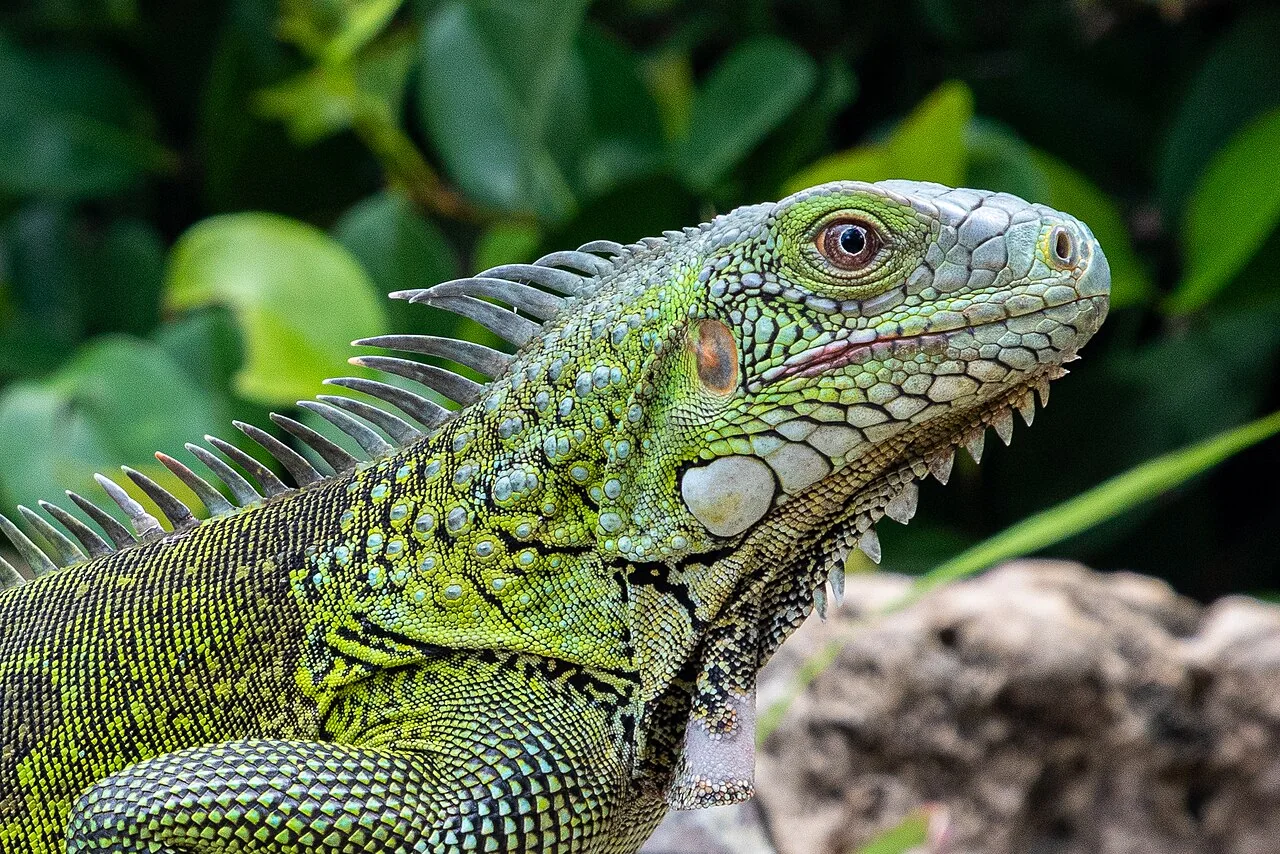
Scientific name
Iguana iguana
The green iguana is a large arboreal lizard. Its long tail, claws and strength require the habitat and movement arrangements to be designed around its adult size [1].
Origin
Tropical America, from Mexico to South America, with a complex taxonomic history depending on the population [4].
- Arboreal
- Herbivorous
- Large-bodied
At a glance
| ADULT SIZE | ≈ 1–1,5 m Approximately 1–1,5 m; large males reach 1,8 m, including the tail [1]. |
|---|---|
| LIFESPAN | 10 to 15 years 10–15 years according to VCA; individuals aged 25 years have been reported [1]. |
| LIFESTYLE | Arboreal Arboreal life with movement on the ground [1] [2]. |
Adult size
Approximately 1–1,5 m; large males reach 1,8 m, including the tail [1].
Adult weight
Chicago Exotics reports adult males reaching 20 pounds, approximately 9 kg; this is not a target weight. [5] Scope: a reported maximum in some adult males, not an average weight.
Lifespan
10–15 years according to VCA; individuals aged 25 years have been reported [1].
Lifestyle
Housing
A HABITAT FOR A LARGE ADULT
Space and sturdy branches — VCA distinguishes horizontal areas for moving around from vertical supports for climbing and basking. Provide appropriately sized, sturdy branches, secure them and maintain access for cleaning: a small starter terrarium is not an adult habitat [2].
VCA distinguishes horizontal areas for moving around from vertical supports for climbing and basking. Provide appropriately sized, sturdy branches, secure them and maintain access for cleaning: a small starter terrarium is not an adult habitat [2].
Care parameters
HEAT AND LIGHT
Thermal gradient and UVB — Thermal gradient and access to UVB [2] Measure at the perches actually used; guard heat sources to prevent direct contact.
Humidity
To be documented — The profile gives no humidity value. This still needs to be documented before setting up the enclosure.
Heat and light
Thermal gradient and access to UVB [2] Measure at the perches actually used; guard heat sources to prevent direct contact.
Dimensions
A setup suited to the adult [2] This overview gives no single numerical minimum; have the plan reviewed before acquiring the animal.
Night — the clinic’s reference
Chicago Exotics suggests approximately 27–29 °C at night (80–85 °F). [5] Scope: captivity; Chicago Exotics guidance. A reported limit is not a target or an established physiological threshold.
Feeding
A FOUNDATION OF LEAVES
The iguana is herbivorous, with a diet largely based on leaves. VCA emphasises the importance of varied plant foods; fruit and flowers should not replace this foundation [3]. Develop the nutritional plan alongside the lighting and growth conditions.
Feeding
The iguana is herbivorous, with a diet largely based on leaves. VCA emphasises the importance of varied plant foods; fruit and flowers should not replace this foundation [3]. Develop the nutritional plan alongside the lighting and growth conditions.
Behaviour and precautions
An adult can become territorial and inflict bites or scratches. Plan safe handling procedures and transport in advance; an animal of this size requires real experience with reptiles [1].
Daily monitoring
Keep weight measurements, foods eaten and changes in behaviour. Add the habitat dimensions and lamp-replacement dates to maintain a useful record as the animal grows.
Adult weight: read the context
Chicago Exotics reports adult males reaching 20 pounds, approximately 9 kg; this is not a target weight. [5] Scope: a reported maximum in some adult males, not an average weight.
Individual monitoring must take age, sex and body condition into account; a published maximum does not provide an ideal weight.
Checklist
- Plan the adult habitat and its maintenance.
- Secure large perches.
- Organise transport before an emergency occurs.
Observations to record
- Meals
- Weight
- Sheds
- Activity
- Lighting
The app provides individual animal records. Check which features are available for your animal in the released version.
Related guides
Original guides in French
Sources
Document-based overview; not a substitute for veterinary advice.
- VCA Animal Hospitals — Iguanas: Owning
Source accessed - VCA Animal Hospitals — Iguanas: Housing
Source accessed - VCA Animal Hospitals — Iguanas: Feeding
Source accessed - The Reptile Database — Iguana iguana
Source accessed - Green Iguana Care — Susan Horton, DVM
Source accessed