
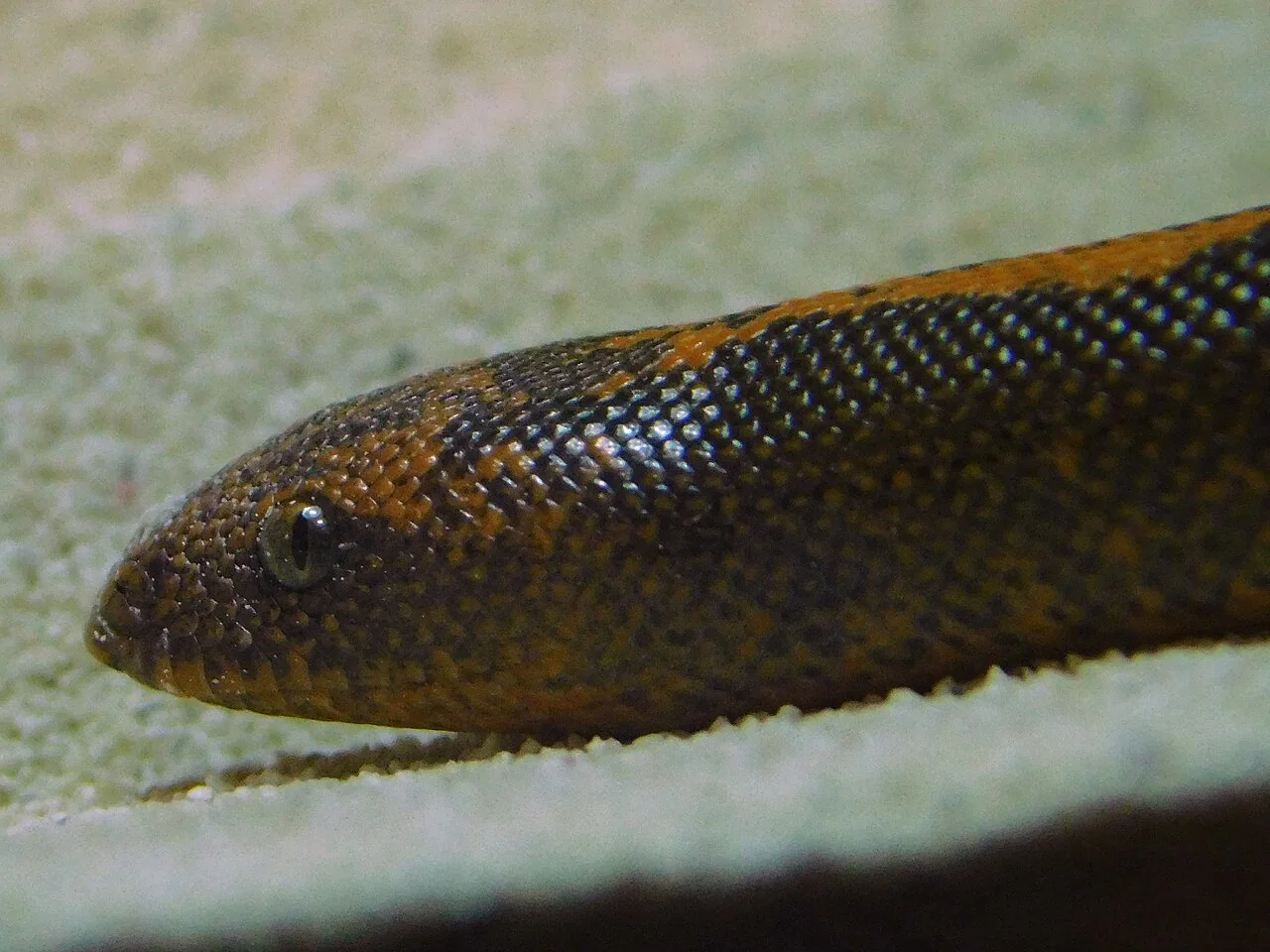
Scientific name
Eryx colubrinus
Other names: Gongylophis colubrinus
The Kenyan sand boa spends much of its activity beneath the substrate. A successful terrarium must allow burrowing while remaining inspectable: the animal’s secretive nature mainly changes how it is observed. [2][3]
Origin
Eastern and north-eastern Africa; the Kenya label does not encompass the species’ entire range. [1]
- Burrowing
- Boa
- Semi-arid habitats
Current taxonomy, overviews from two institutions and attributed specialist practice. Differing litter figures not retained; sizes not equated with SVL.
At a glance
| ADULT SIZE | According to sex Females 56–61 cm; males 38–51 cm, TL/SVL unspecified [2]. |
|---|---|
| LIFESPAN | 15–20 years and more BGSU educational indication [2]. |
| LIFESTYLE | Burrowing Mainly nocturnal [2]. |
Adult size
BGSU gives approximately 56–61 cm in females and 38–51 cm in males; TL/SVL convention unspecified. [2]
Lifespan
15–20 years and more according to the BGSU overview; an educational reference point without a documented cohort average. [2]
Lifestyle
Burrowing and mainly nocturnal; ambush hunting beneath loose ground. [2][3]
Housing
A SUITABLE HABITAT
Loose ground and shelters — Secure heavy furnishings firmly [2].
Individual housing, burrowable ground and securely fixed furnishings; area suited to actual size. [2][4]
Care parameters
WARM SPOT · DAY
34–35 °C — Surface, ReptiFiles practice [4].
COOL AREA · DAY
26–28 °C — Daytime reference point [4].
Humidity
Localised moist refuge — Predominantly dry ground [4].
Heating surface
34–35 °C ReptiFiles daytime reference point, to measure on the accessible surface. [4]
Cooler zone
26–28 °C Reference point from the same profile; do not confuse it with the full substrate depth. [4]
Humidity
Mainly dry ground, moist refuge Localised choice proposed by ReptiFiles; no uniform percentage retained. [4]
Night — the clinic’s reference
Exotic Pet Vets gives approximately 21–24 °C at night (70–75 °F). [5] Scope: captivity; Eryx colubrinus; Exotic Pet Vets indication. A reported limit is neither a target nor an established physiological threshold.
Feeding
MONITORED FEEDING
Mice used in an institution; ask for meals already accepted [2][3].
Identify the species and retain provenance
The Reptile Database retains Eryx colubrinus and lists the former name Gongylophis colubrinus. The status of subspecies, including loveridgei, remains debated. [1] Keep the name given by the breeder, but turn neither colour nor that label into geographical certainty. Ask for date of birth, meals actually taken and parental history. Two animals of the same colour can have different histories; photographing the back and flanks provides a more useful individual reference than a commercial description alone.
Adult size, lifespan and lifestyle
BGSU gives approximately 56–61 cm in females and 38–51 cm in males; TL/SVL convention unspecified. [2]
15–20 years and more according to the BGSU overview; an educational reference point without a documented cohort average. [2]
Burrowing and mainly nocturnal; ambush hunting beneath loose ground. [2][3]
Understanding a snake that disappears beneath the ground
Eyes and nostrils high on the head allow surveillance from the sand; the short tail bears scales that provide purchase during burrowing. [3] This specialisation explains why an almost empty setup can seem calm without being well suited. Organise observation around traces, emergence and areas used. Routinely lifting all the decor to check presence destroys the reference points you are trying to observe. Instead, prepare accessible refuges and a methodical inspection.
Building a safe, inspectable substrate
BGSU emphasises securing heavy elements that an animal can undermine by digging. [2] This must be addressed before filling the terrarium: no stack should depend on sand stability alone. Reserve access for removing soiling and examining beneath shelters. Also test closure with substrate in place, because its depth changes the accessible height. Keep a photograph of the initial setup to identify later settling or movement of furnishings.
Measure heat where the boa moves
The numerical reference points above come from a practical profile, not a study defining an individual optimum. [4] To use them, draw a small plan with the heated surface, shelters and measurement points in the ground. An air reading near the lid does not describe a buried hide. Check thermostat function and access to a retreat zone before arrival. Also retain night-time readings; a heating or depth change requires a new check.
Feeding: know the meals already accepted
Racine Zoo feeds its boa mice; BGSU describes juveniles whose feeding start can be less straightforward than that of adults. [2][3] Before acquisition, ask for documented independent feeding and the exact presentation used. Prefer thawed prey as recommended by ReptiFiles. [4] Separately record what was offered, accepted or found again. A missed meal should prompt examination of context, setup and changes in body condition, rather than immediately multiplying attempts or increasing prey size.
Water, shedding and maintenance of a semi-arid environment
A mostly dry environment remains compatible with available water and a more humid refuge. [4] The practical value is to offer a choice, then observe its use. Check the container and refuge during maintenance rounds, including the ground beneath them. Moistening must not conceal a ventilation or cleanliness problem. After a shed, record completeness and climate context; if fragments persist, photograph them for competent advice rather than pulling off the skin.
Breeding and housing newborns
Eryx colubrinus gives birth to live young, despite historical use of the term ovoviviparous in the references. [1][3] This profile does not turn one collection’s timetables into a breeding programme. Before any project, plan individual inspectable housing, reliable identification and a solution for juveniles that fail to start feeding. Offspring numbers, maturity and intervals between breeding events are not targets to reach. Document the female’s observations without inferring pregnancy from body shape alone.
Daily monitoring and preparation level
The compact body makes visual impressions misleading: compare photographs taken under similar conditions and weighings obtained without repeated handling. BGSU notes that a surprised animal may bite. [2] Prepare access to a hidden boa before putting hands into the substrate. The log can combine meals, sheds, weight, emergence and setting changes. Regurgitation, deterioration in body condition or unusual breathing warrants veterinary advice; the absence of a published normal value must not delay that advice.
Checklist
- Fix stones before filling.
- Test the gradient in accessible zones.
- Obtain the independent feeding history.
Observations to record
- Meals offered and accepted
- Sheds and shelters used
- Weight and comparable photographs
- Ground and air temperatures
The app provides individual animal records. Check which features are available for your animal in the released version.
Related guides
Original guides in French
Sources
Document-based overview; not a substitute for veterinary advice.
- The Reptile Database — Eryx colubrinus
Source accessed - Eileen Underwood, BGSU Herpetarium — Kenyan Sand Boa
Source accessed - Racine Zoo — Kenyan Sand Boa fact sheet
Source accessed - Mariah Healey, ReptiFiles — Kenyan Sand Boa Care
Source accessed - Kenyan Sand Boa Care Guide
Source accessed