
Scientific name
Corallus hortulana
Other names: Corallus hortulanus · Corallus enydris · Boa hortulana
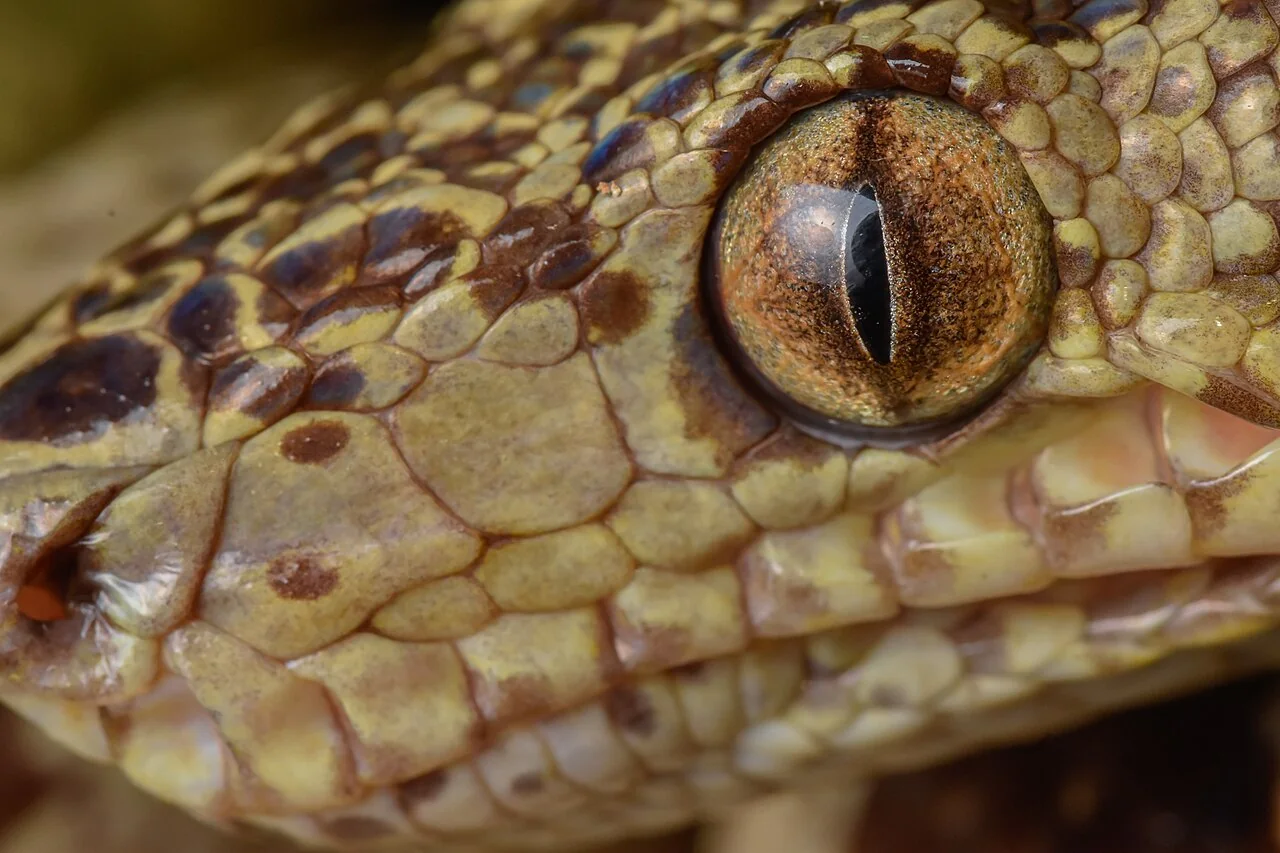
The Amazon tree boa is an arboreal snake with highly variable colours. Its movement and defensive response require an accessible setup and prepared interventions, rather than confidence based on slenderness alone. [1][2]
Origin
South America east of the Andes; not all older Antillean records are assigned to this species today. [1]
- Arboreal
- Variable coloration
- Boa
Current name and former distributions distinguished; attributed commercial practice; uncorroborated night-time minimum not retained.
At a glance
| ADULT SIZE | Often 1,2–1,5 m ADW; TL/SVL unspecified [2]. |
|---|---|
| LIFESPAN | Approximately 20 years Captive estimate without a cohort [2]. |
| LIFESTYLE | Arboreal Nocturnal and sometimes diurnal [2]. |
Adult size
ADW reports lengths generally of 1,2–1,5 m without specifying TL or SVL; keep the historical range and scope visible. [2]
Lifespan
Approximately 20 years in captivity mentioned by ADW, without an identifiable cohort; a cautious documentary indication. [2]
Lifestyle
Arboreal, active at night but also during the day according to observations. [2][3]
Housing
A SUITABLE HABITAT
Branches and cover — Routes between several levels [4].
Interconnected branches, cover and maintenance access; dimensions to adjust to the individual. [4]
Care parameters
WARM SPOT · DAY
Approximately 30 °C — Swell daytime reference point [4].
COOL AREA · DAY
22–25 °C — Daytime; night to clarify [4].
Humidity
60–80 % — Monitored commercial reference point [4].
Daytime heating
Approximately 30 °C Practical reference point published by Jeremy Gay at Swell. [4]
Cooler zones
22–25 °C Daytime values from the same source; extreme night-time drop not retained. [4]
Humidity
60–80 % A commercial reference point to measure; incorporate ventilation and maintenance. [4]
Feeding
MONITORED FEEDING
Suitable rodents; avoid overfeeding [4].
Nomenclature and colour diversity
The Reptile Database uses Corallus hortulana; the spelling hortulanus remains frequent in older and zoological sources. It excludes from its current distribution several old Caribbean records assigned to other species. [1] The colour diversity described by ADW does not constitute a list of new taxa. [2] Recording species name, observed colour and stated origin separately makes the record clearer. A selective-breeding label demonstrates neither a natural locality nor a mode of inheritance.
Adult size, lifespan and lifestyle
ADW reports lengths generally of 1,2–1,5 m without specifying TL or SVL; keep the historical range and scope visible. [2]
Approximately 20 years in captivity mentioned by ADW, without an identifiable cohort; a cautious documentary indication. [2]
Arboreal, active at night but also during the day according to observations. [2][3]
Habitat and observed activity
Oakland Zoo places this boa in rainforests and tropical savannas. [3] ADW describes use of vegetation but also ground observations, with possible activity by day and night. [2] Usable height must therefore be accompanied by passages between levels and accessible ground. Before arrival, draw the setup in three dimensions and check routes. An isolated branch in the centre of a large enclosure does not offer the same choices as a network of linked, partly covered supports.
Perches and maintenance access
The practical source Swell recommends an arboreal habitat furnished with branches and elements providing cover. [4] Choosing supports that can be inspected, fixed and removed without dismantling the whole terrarium facilitates future care. Doors must provide access to water and soiling without routinely crossing the area where the boa stays. Test fixings and keep closure points clear. Assessment of space must concern usable routes, not only external dimensions.
Heat and humidity: attributed reference points
Jeremy Gay publishes at Swell a basking point close to 30 °C, cooler daytime zones of 22–25 °C and 60–80 % humidity. [4] His very low night-time proposal is not retained owing to insufficient corroboration. This documentary choice remains visible: the night-time framework must be clarified before arrival. Measuring branches and air at several heights allows the gradient to be checked. Record misting times and drying phases without concluding that one reading represents the whole day.
Feeding: varied natural history
ADW reports various vertebrate prey, including birds, bats and rodents. [2] Swell describes captive use of thawed rodents and warns against automatically maintaining large weekly rations in adults. [4] This practical account does not define a universal menu. Ask which prey have already been accepted, then record each offering and its result. The boa’s slender shape must not lead to portion selection based on total length alone; body condition and individual history must guide discussion with a competent person.
Behaviour and room for intervention
Oakland Zoo emphasises this boa’s well-developed infrared receptors. [3] ADW describes an ambush posture and defensive reactions that can include bites. [2] Preparing actions before opening avoids treating a stationary snake as inactive or easy to pick up. Tools, cleaning container and closures must be ready. Observation without handling also distinguishes a usual posture from a change. This species must not be presented as an automatic choice for starting with an arboreal snake.
Breeding: stay within what is established
The Reptile Database describes internal development resulting in live young. [1] ADW specifies that data on mating in the natural environment are limited and mainly summarises captive practices. [2] Its figures and timetables therefore do not become a universal procedure. Preparing a project requires correct parent identification, monitoring of their condition and housing for juveniles. Recording observed events is useful; announcing a birth date from copulation alone would be too assertive.
Monitoring water, sheds and meals
A manual log can bring together measured values, interventions, meals and sheds, with dated photographs of branches used. Checking water and accessible surfaces helps identify soiling or an unstable support. In the event of repeated refusals, regurgitation or respiratory change, pass the full history to the veterinarian rather than an isolated figure. The published lifespan is a documentary estimate, not a guarantee. Night-time conditions and individual needs remain points to clarify before considering the setup ready.
Checklist
- Keep hortulanus as an alias of the current name.
- Prepare a network of accessible supports.
- Have the night-time framework clarified before arrival.
Observations to record
- Meals and refusals recorded manually.
- Measurements by height and watering times.
- Sheds and photographs of usual positions.
The app provides individual animal records. Check which features are available for your animal in the released version.
Related guides
Original guides in French
Sources
Document-based overview; not a substitute for veterinary advice.
- The Reptile Database — Corallus hortulana
Source accessed - Animal Diversity Web — Corallus hortulanus, Kevin Winner
Source accessed - Oakland Zoo — Amazon Tree Boa
Source accessed - Jeremy Gay, Swell Reptiles — Amazon tree boa care sheet
Source accessed