
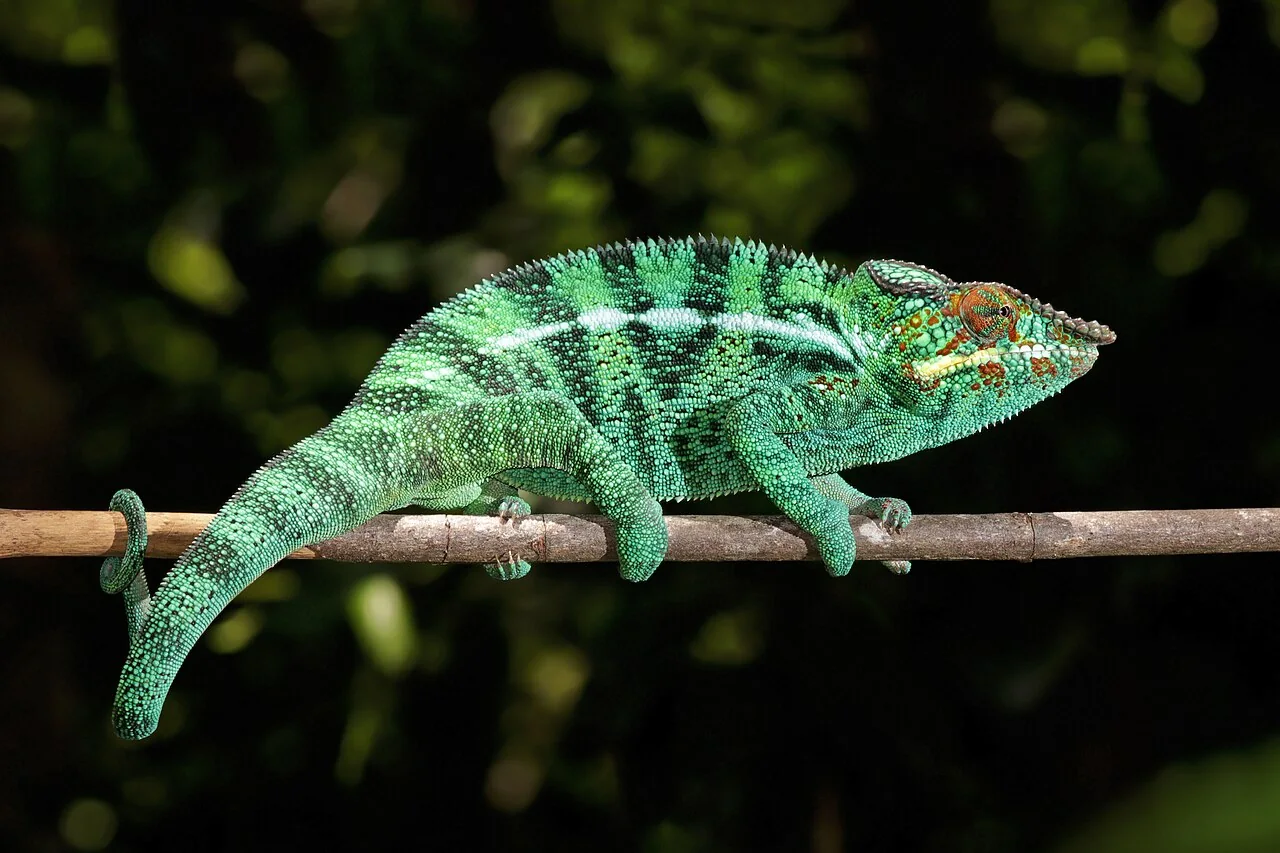
Scientific name
Furcifer pardalis
Furcifer pardalis is the panther chameleon. ADW documents sexual dimorphism and geographical colour variations. These variations alone do not constitute a husbandry protocol. [2]
Origin
Northern and coastal regions of Madagascar; ADW describes, in particular, lowland deciduous forests and open edges. [2]
- Arboreal
- Diurnal
- Insectivorous
- Solitary
At a glance
Northern and coastal regions of Madagascar. Diurnal, arboreal and territorial; grasping feet and a prehensile tail help it move around. [2]
| ADULT SIZE | 25–51 cm According to sex; convention not specified [1]. |
|---|---|
| LIFESPAN | 3–7 years References by sex [1]. |
| LIFESTYLE | Arboreal Diurnal and territorial [2]. |
Adult size
Males 36–51 cm, females 25–36 cm; length convention not specified by Tree of Life. [1]
Adult weight
An adult weight range is not established in the selected sources. Sex, size and individual changes must accompany every weighing.
Lifespan
5–7 years in males, 3–4 in females according to Tree of Life; variable captive references. [1]
Lifestyle
Diurnal, arboreal and territorial; grasping feet and the tail help with movement between branches. [2]
Expert
Editorial assessment: hydration, drainage, light exposure and limiting stress require a closely monitored enclosure. A humidity percentage alone does not describe these needs. [1][3]
Housing
A VERTICAL SPACE
61 × 61 × 122 cm — Veterinary minimum; length × depth × height [3].
Exotic Pet Vets minimum: 61 × 61 × 122 cm, length × depth × height, rounded conversion of 24 × 24 × 48 inches. [3]
Care parameters
WARM PERCH · DAY
31–33 °C — Air/surface not distinguished [1].
AIR AT THE CENTRE · DAY
24–28 °C — Bottom: 21–24 °C [1].
Humidity
40–50 % by day — More than 70 % at night; drainage and ventilation [3].
Day
Warm perch 31–33 °C; centre 24–28 °C; bottom 21–24 °C [1] Air/surface not distinguished at the perch.
Night
18–22 °C [1] Darkness.
UVB
UVB tube, 12 h day / 12 h night [1] UVI not established here; have calibration checked.
Humidity
40–50 % by day; more than 70 % at night [3] Exotic Pet Vets references: drainage and air exchange are essential.
Feeding
AN APPROPRIATE DIET
Varied insects; portions adapted to life stage and body-condition monitoring [3].
Water, foliage and maintenance
Provide accessible droplets on foliage; clean spraying equipment and drain excess water. Install stable branches, leafy retreats and effective ventilation. [3]
Humidity ranges differ: 50–80 % at Tree of Life, a day/night breakdown at Exotic Pet Vets. [1][3] The display adopts the latter framework; the instructions from the two guides must not be added together.
Feeding and supplements
Tree of Life suggests varied insects daily for juveniles, every other day for adults, fed 24–48 hours beforehand. Remove remaining prey. Coordinate supplements and UVB with a specialist. [1]
An animal to observe
The species lives alone and defends its territory. Its mobile eyes, feet and tail help it locate prey and move between branches. Reproductive encounters do not justify keeping a pair together all year. [2]
Limit handling. [1] For records, note the resumption of activity and feeding after an interaction; a dated observation with context is more useful than a simple judgement of temperament.
Reproduction and laying site
The species lays eggs; the female digs and buries them. [2] Chicago Exotics provides for a container of soil that is sufficiently loose and moist to construct a laying site. [4] This need is not limited to planned breeding: a female can produce eggs without having been with a male. The absence of a suitable site is among the factors that can contribute to egg retention. Plan an accessible laying site suited to the female with the veterinarian, even if she lives alone. [5]
A colour change or a theoretical age does not automatically trigger an introduction. This profile provides no universal weight threshold, cooling regime or incubation temperature intended to influence sex. Suspected egg retention requires veterinary advice. [4]
Daily monitoring
Chicago Exotics lists sunken eyes, weakness, rapid weight loss, regurgitation and very watery droppings among signs of illness in chameleons. [4] A wound or damaged crest may also be a burn: consult a veterinarian. [3]
Record opportunities to drink, actual insect intake, droppings, day/night readings and drainage operation. Photographing the enclosure’s context and keeping weights allows you to show a veterinarian changes over time rather than drawing a conclusion from a single observation.
Checklist
Observations to record
- Observed drinking
- Meals eaten
- Weight and grip
- Droppings
- Day/night humidity
- Observed egg laying
The app provides individual animal records. Check which features are available for your animal in the released version.
Related guides
Original guides in French
Sources
Document-based overview; not a substitute for veterinary advice.
- Tree of Life Exotic Pet Medical Center — Panther Chameleon Care
Source accessed - University of Michigan, Animal Diversity Web — Furcifer pardalis
Source accessed - Exotic Pet Vets — Panther Chameleon Care Guide
Source accessed - Chicago Exotics Animal Hospital — Old World Chameleon Care
Source accessed - VCA Animal Hospitals — Reptiles: Dystocia, Gregory Rich et Rick Axelson, vétérinaires
Source accessed