
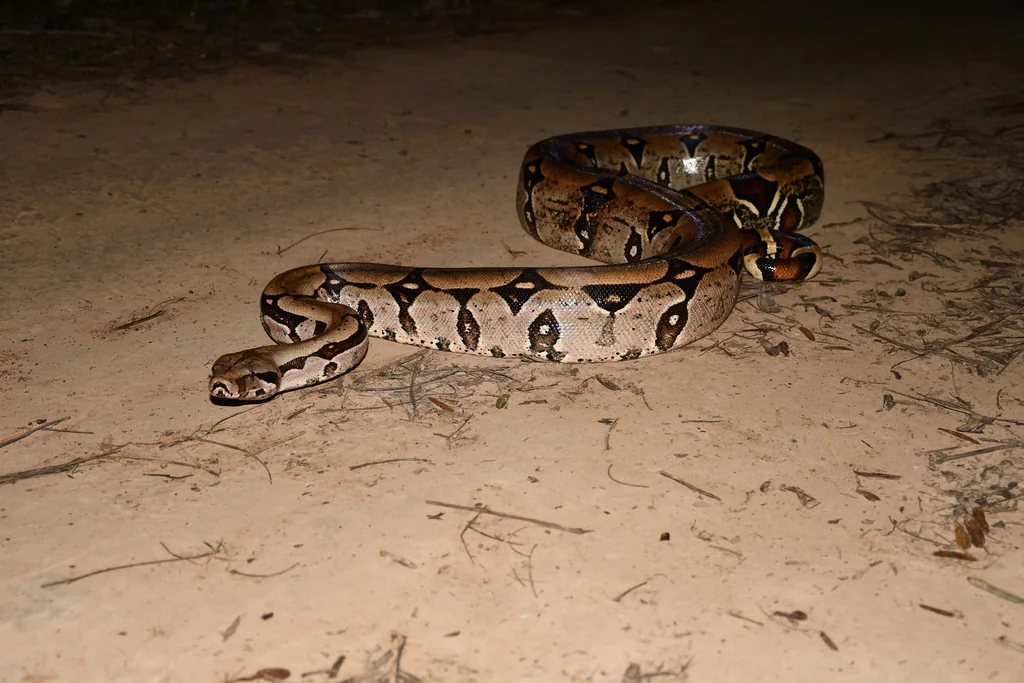
Scientific name
Boa constrictor
The name “boa constrictor” is sometimes used broadly. This profile concerns Boa constrictor and distinguishes reference points dedicated to South American boas from advice covering several species in the genus. [1][3]
Origin
South America; distribution and taxonomic units detailed in The Reptile Database. [1]
- Boa
- Large constrictor
- Provenance to document
Boa constrictor distinguished from imperator; attributed BCC framework; reservations over older genus-level profiles.
At a glance
| ADULT SIZE | Up to 3 m UNAL, Amazonia; TL/SVL unspecified [2]. |
|---|---|
| LIFESPAN | Not established Genus-level clinical lifespan [4]. |
| LIFESTYLE | Ambush and shelters Swimming also described [2]. |
Adult size
Up to 3 m in the Amazonian presentation from the National University of Colombia’s museum; TL/SVL convention not given. [2]
Lifespan
The clinic mentions 20–35 years for boas broadly; no average specific to the current taxon is retained. [4]
Lifestyle
Ambush or active hunting; uses shelters, with swimming ability described by the museum. [2]
Housing
A SUITABLE HABITAT
Individual space — Access suited to the large body [4].
An individual setup sized to the animal’s build, with shelters and prepared maintenance access. [4]
Care parameters
WARM SPOT · DAY
29–30,5 °C — BCC basking point, Darren Hamill [3].
COOL AREA · DAY
26–27,5 °C ambient — Ambient conditions, not a defined cool zone [3].
Humidity
65–75 % — BCC reference point; distinct clinical source [3][4].
Daytime basking point
29–30,5 °C Darren Hamill’s practice for so-called BCC boas; not an experimental standard. [3]
Daytime ambient temperature
26–27,5 °C Ambient value from the same framework, distinct from a precisely defined cool point. [3]
Night
23–25,5 °C Practical reference point; no reproductive cooling prescribed here. [3]
Humidity
65–75 % The keeper’s BCC framework; the broader clinical profile proposes other values. [3][4]
Feeding
MONITORED FEEDING
Thawed rodents and condition monitoring [4].
Separate species, lineage and trade name
Boa constrictor is the name retained here; Boa imperator already has its own profile. The Reptile Database details revisions of the group. [1] Breeder Darren Hamill specifies that his text particularly covers boas designated Suriname, Guyana, Venezuela, Brazil or Peru, distinct from boas commercially called Colombian. [3] These labels still need documenting animal by animal. Keeping the parents’ stated origin and transfer documents is preferable to identifying a boa solely by the intensity of red in its tail.
Adult size, lifespan and lifestyle
Up to 3 m in the Amazonian presentation from the National University of Colombia’s museum; TL/SVL convention not given. [2]
The clinic mentions 20–35 years for boas broadly; no average specific to the current taxon is retained. [4]
Ambush or active hunting; uses shelters, with swimming ability described by the museum. [2]
Anticipate the adult body and its movements
The Colombian museum presents Amazonian boas reaching up to three metres, with females generally larger. [2] It does not specify its length convention or provide an average across all populations. The project must therefore start from the individual, its growth and the space actually available. Check turning opportunities, routes and the maintenance opening. A large container or hide can take away a substantial part of the area stated on the terrarium label.
Shelters and habitat organisation
The museum mentions hollow logs and abandoned burrows among shelters used. [2] Aurora clinic recommends one boa per setup and suitable refuges. [4] Providing several protected positions facilitates the animal’s choice without forcing it to remain exposed. Construction must also allow every shelter to be inspected and soiling removed. A door that is too narrow or decor that cannot be dismantled becomes a concrete difficulty when the adult snake needs examination or transport.
An attributed climate framework, not a mixture
Darren Hamill publishes a basking point of 29–30,5 °C, ambient conditions of 26–27,5 °C and a night-time range of 23–25,5 °C for his BCCs. [3] His humidity target differs from that in the clinical profile covering boas more broadly. [3][4] The cover retains the first framework and makes its scope visible. Settings must be checked at the animal’s actual location. Recording air, heated surface and shelter interiors separately avoids comparing measurements that describe different things.
Water and maintenance on the boa’s scale
Aurora recommends a stable container that accommodates the body, with accessible entry and exit; the profile notes that the animal may defecate in it. [4] Planning for the filled container’s weight and how to remove it is part of the setup. In the log, date cleaning and water replacement and record spills. Measured humidity does not remove the need to look at the ground. Monitoring must detect drainage failure or a leak before it affects the entire housing.
Feeding and changes in condition
The museum describes a diet including mammals, birds and reptiles. [2] The clinic reports captive use of suitable rodents and prefers thawed prey to limit injuries associated with live prey. [4] The aim is not to reproduce the whole wild-prey list. Start with a reliable history, then record meals and refusals. Frequency is discussed according to age, sex, growth and body condition; no universal adult weight or rapid-growth programme is proposed.
Births and limits of breeding recipes
The Reptile Database classifies this boa among snakes giving birth to live young. [1] This fact gives neither the size of a future litter nor a cooling timetable to apply. Practices described for one lineage or another species in the genus must be identified before reuse. Preparing breeding requires monitoring the parents, available individual housing and informed recipients. Observed mating dates alone do not allow a birth to be predicted with certainty.
Precautions and individual record
A large boa requires realistic organisation of movement, maintenance and a possible consultation. Preparing the transport container and access before an emergency is more useful than a reputation for docility. Keeping a manual log with weighings, meals, sheds, photographs and parameters makes the history transferable. If condition changes, present observations without immediately assigning a cause to climate or prey. Lifespan given for a broad group recalls a lasting commitment without becoming a numerical promise specific to this species.
Checklist
- Confirm Boa constrictor and document the lineage.
- Prepare space and transport for adult build.
- Choose a climate framework consistent with the individual.
Observations to record
- Meals and refusals in a manual journal.
- Dated weight, body-shape and growth records.
- Water, sheds and localised measurements.
The app provides individual animal records. Check which features are available for your animal in the released version.
Related guides
Original guides in French
Sources
Document-based overview; not a substitute for veterinary advice.
- The Reptile Database — Boa constrictor
Source accessed - Museo de Historia Natural, Universidad Nacional de Colombia — Boa constrictor, Amazonie
Source accessed - Darren Hamill Reptiles — Boa Constrictor Husbandry, expérience BCC
Source accessed - Dayna Willems, DVM, Aurora Animal Hospital — Boa Constrictor Care
Source accessed