
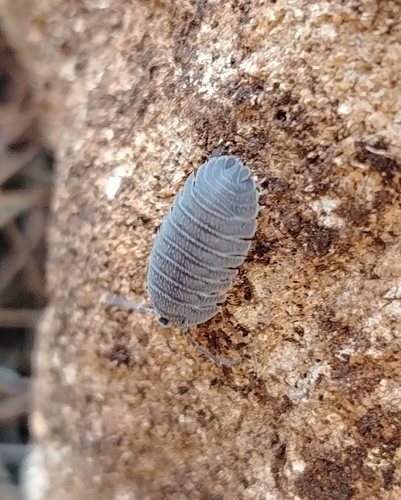
Scientific name
Armadillidium peraccae
Other names: Armadillidium peraccae
Armadillidium peraccae is retained here as a distinct species. A specialist publication distinguishes it from related species in the A. nasatum group. [1]
Origin
Coasts of southeastern Italy, northern Aegean islands and the Sea of Marmara in Schmalfuss’s synthesis. [1]
- Eastern Mediterranean
- Litter
- Distinct species
Taxonomic synthesis and two breeders; contradictory commercial size information flagged.
At a glance
A distinct species in the Armadillidium nasatum group, documented from southeastern Italy to the northern Aegean and Sea of Marmara [1].
| DOCUMENTED SIZE | Divergent measurements Insektenliebe: less than 18 mm or 15–20 mm [2]. |
|---|---|
| LIFESPAN | To be documented No supported individual lifespan in the selected sources. |
| LIFESTYLE | Among shelters Visible surface activity reported by the breeder [2]. |
Adult size
Insektenliebe publishes less than 18 mm in its table but around 15–20 mm in its text; this disagreement remains visible. [2]
Lifespan
Individual lifespan is not established by the selected documents; no numerical value is extrapolated.
Lifestyle
The supplier describes an active species, sometimes visible on the surface, in setups rich in shelters. This observation does not guarantee constant daytime activity. [2]
Housing
SETUP AND SHELTERS
Humus and leaves — Humus, leaves and decayed white wood in the cited practice; provide observable shelters [2].
Thick litter over humus and decaying hardwood, bark shelters and moss; one corner remains humid. [2]
Care parameters
BREEDER REFERENCE
20–26 °C — Insektenliebe practice, not a validated safety interval [2].
Humidity
Localised shelter — Slightly humid shelter and other areas less humid, without saturation [2].
Temperature
20–26 °C in Insektenliebe’s practice [2] A practice value when attributed to a breeder; no universal safety threshold is inferred.
Humidity and ventilation
Slightly humid shelter, other areas less humid, without saturation [2] Examine substrate beneath shelters and record the enclosure’s actual conditions.
Feeding
DIET AND CALCIUM
Leaves and wood as a base, measured supplements and calcium according to Insektenliebe; Bog Beafts mentions calcium and vegetables [2][3].
Scope of this profile
Taxonomic synthesis and two breeders; contradictory commercial size information flagged.
Keeping a clear identity
Similarity between related species does not permit any old label to be reused. The elongated frontal triangle is among the group’s characters, without being a complete key by itself. [1] Request a documented identification when a group bears an uncertain name, and keep the caveat in the register rather than deleting it.
Setting up before receiving animals
The supplier suggests a substrate combining humus, leaves and decayed white wood. [2] Prepare the enclosure early enough to check how it retains water. An overview photograph and a few notes on materials then make comparison easier; they also allow the setup to be described exactly to someone asked for advice.
Food resources
The breeding page provides leaves and wood as a base, small amounts of supplements and a calcium source. [2] Bog Beafts also notes calcium and vegetables in its culture. [3] Recording additions in an accessible area reduces uncertainty about leftovers. The weight of a commercial package must never become an adult weight in the log.
Managing the gradient
Local moisture is more informative than a word such as ‘Mediterranean’. The breeding account keeps a zone available for hydration. [2] Describe ground condition with simple, repeatable observations, then note watering performed. Avoid changing substrate, ventilation and temperature together when trying to understand the origin of a behavioural change.
Recording births
The breeder reports regular reproduction under its conditions, without a controlled series allowing the output of another colony to be predicted. [2] Record genuinely visible young and successive size classes. A group received with several generations already present does not allow all births to be attributed to the new husbandry conditions.
Limits and traceability
The size discrepancy on a single page illustrates the need to qualify figures. A species’ presence on a sales list also does not demonstrate the provenance of a particular group. Keeping invoices or transfer notes, photos and culture-separation dates allows identity to be tracked without claiming to certify their history.
French references: Armadillidium peraccae
Reference found in the following French catalogues: Isopodshop [4]; Insectorus [6]. Catalogue presence, including out-of-stock listings, does not measure sales.
Isopodshop suggests 18-26 °C for husbandry. This is a commercial reference, not a demonstrated safe range. [4]
Insectorus states 18-25°C. This commercial range does not demonstrate safety thresholds. [6]
Insectorus states 2cm in adulthood, without explaining the measurement method. [6]
These sellers’ figures remain separately attributed: combining them does not create a newly validated husbandry range.
Checklist
- Keep the group’s provenance and identification.
- Prepare resources and shelters before arrival.
- Define a simple check without regularly dismantling the environment.
Observations to record
- Manual intervention log
- Substrate and food condition
- Young, moults and deaths observed
The app provides individual animal records. Check which features are available for your animal in the released version.
Sources
Document-based overview; not a substitute for veterinary advice.
- Schmalfuss (2013) — The species of the genus Armadillidium known from Greece, transcription du texte
Source accessed - Insektenliebe — Armadillidium peraccae
Source accessed - Bog Beafts — Care guides, Armadillidium peraccae
Source accessed - Armadillidium peraccae — Isopodshop
Source accessed - World Marine, Freshwater and Terrestrial Isopod Crustaceans database — Armadillidium peraccae
Source accessed - Armadillidium peraccae — Insectorus
Source accessed